CREAMY CRAB AND SHRIMP STUFFED JUMBO PASTA SHELLS

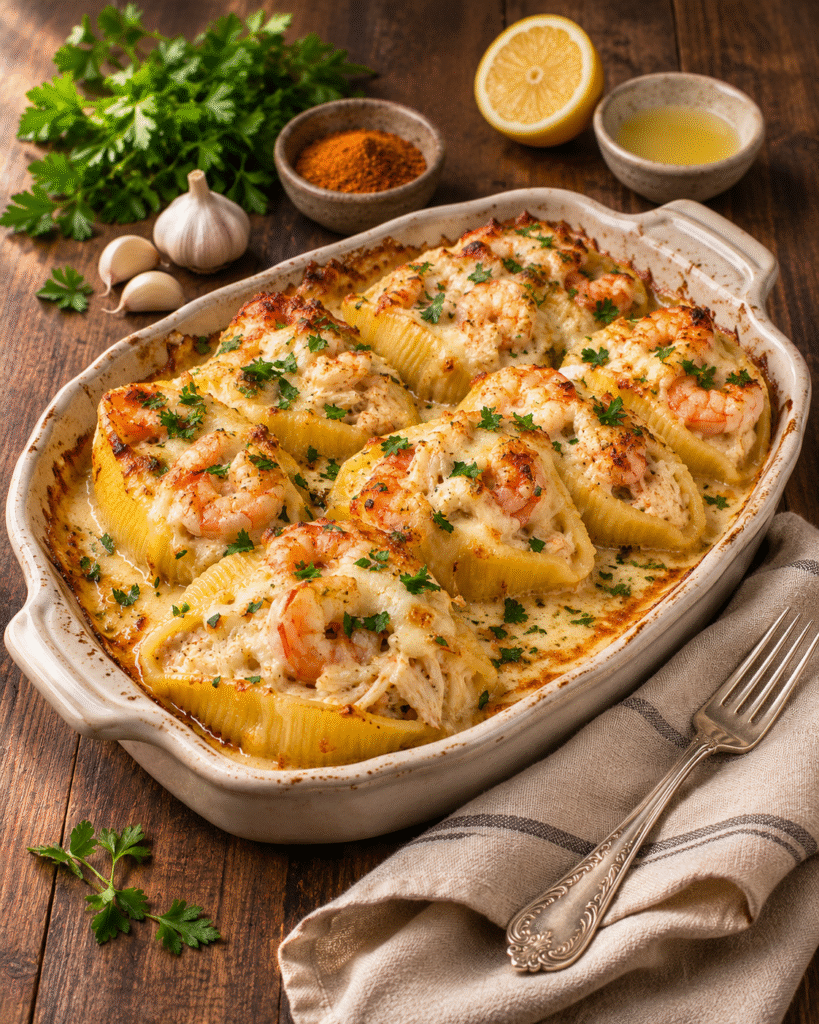
Tender jumbo pasta shells filled with sweet lump crabmeat, shrimp, rich cream cheese, and melted mozzarella make these Creamy Crab and Shrimp Stuffed Jumbo Pasta Shells a comforting seafood dinner. Every shell is packed with a cheesy filling seasoned with fresh garlic, lemon juice, Parmesan, and Old Bay.
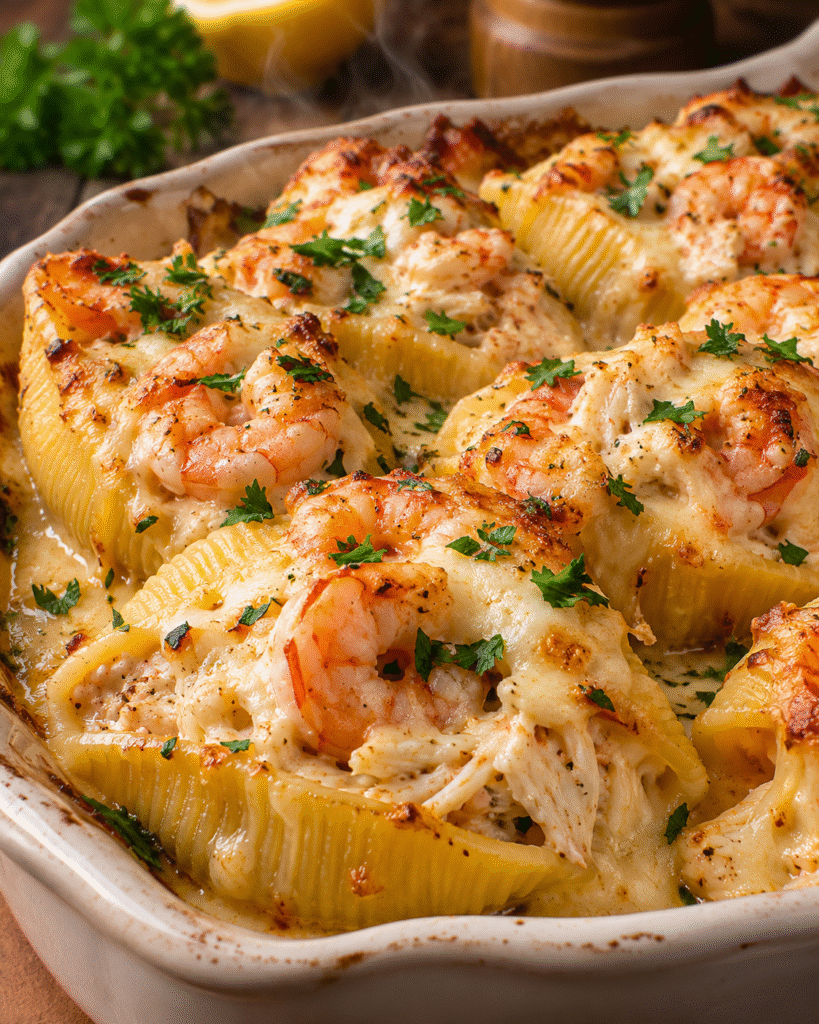
Unlike stuffed shells covered in a heavy cream or tomato sauce, this recipe keeps the focus on the seafood filling itself. The shells are arranged in a baking dish, topped with mozzarella, and baked until the cheese melts and the centers are thoroughly heated.
With just ten ingredients and a simple oven-baking method, these seafood stuffed shells are a lovely option for family dinners, holiday meals, or a seafood-inspired weekend dinner.
Recipe at a Glance
Prep Time: 20 minutes
Cooking Time: 30 minutes
Total Time: 50 minutes
Servings: 6
Yield: 20 jumbo stuffed shells
Oven Temperature: 375°F (190°C)
Method: Stovetop and Oven Baking
Why You’ll Love These Seafood Stuffed Shells
- Two seafood favorites: Lump crabmeat and chopped shrimp provide a satisfying combination of delicate seafood flavors.
- Rich, cheesy filling: Cream cheese, mozzarella, and Parmesan create a creamy center.
- Classic Old Bay seasoning: A teaspoon of Old Bay complements the sweetness of the crab and shrimp.
- Simple preparation: No separate sauce is required in the original recipe.
- Make-ahead friendly: The assembled shells can be refrigerated for up to one day before baking, provided the seafood is fresh and stored safely.
What Makes This Recipe Special?
Traditional stuffed pasta shells commonly feature ricotta cheese and tomato sauce.
This seafood variation uses softened cream cheese as its filling base, giving the mixture a richer, denser consistency.
Mozzarella adds a mild melted-cheese texture, while grated Parmesan contributes savory flavor.
The lemon juice provides a bright contrast to the cream cheese and seafood, and Old Bay adds a familiar coastal seasoning.
Another distinctive feature is the absence of a separate pouring sauce. The pasta surrounds the creamy seafood filling, and the remaining mozzarella melts over the top during baking.
Because there is no added sauce or broth, this version is intended to be more cheese-filled than saucy. Cooking the pasta al dente and avoiding excessive baking are especially important for preserving its texture.
Ingredients You’ll Need
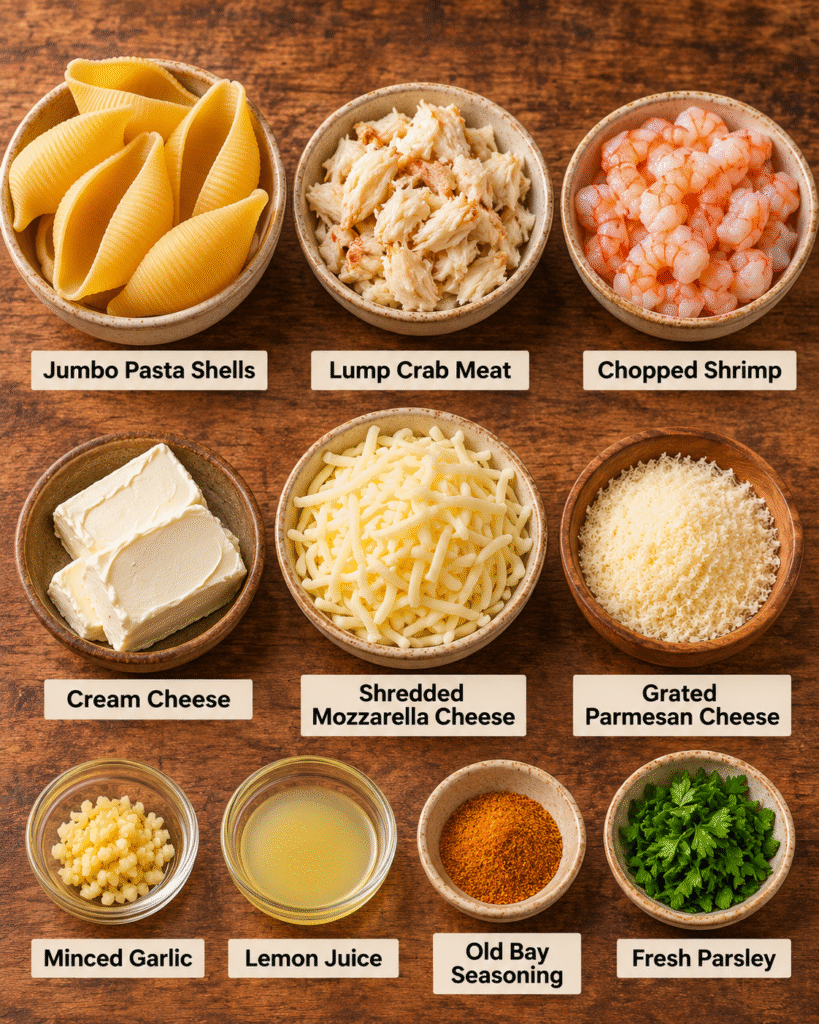
Complete Ingredient List
- 20 jumbo pasta shells
- 8 oz lump crab meat
- ½ lb shrimp, chopped
- 8 oz cream cheese, softened
- 1 cup shredded mozzarella cheese
- ½ cup grated Parmesan
- 2 cloves garlic, minced
- 1 tbsp lemon juice
- 1 tsp Old Bay seasoning
- Fresh parsley, chopped
Helpful Ingredient Notes
Jumbo pasta shells: Choose large pasta shells designed for stuffing. Cooking them al dente helps them hold their shape while being filled and baked.
Lump crabmeat: Use fully cooked, ready-to-eat lump crabmeat. Drain thoroughly and check for shell fragments before mixing.
Shrimp: Chop the shrimp into pieces small enough to distribute easily throughout the filling. The original recipe does not specify whether the shrimp are raw or precooked, so this should be confirmed before publication.
Cream cheese: Softened cream cheese is the base of the filling. It helps bind the seafood, garlic, seasonings, and shredded cheeses.
Mozzarella: Half of the mozzarella is mixed into the filling, while the remainder is sprinkled over the assembled shells.
Parmesan: Grated Parmesan contributes a slightly salty, savory flavor to the seafood mixture.
Fresh garlic: Minced garlic complements the crab, shrimp, and cheeses.
Lemon juice: A tablespoon of lemon juice brings brightness to the rich filling.
Old Bay seasoning: Old Bay adds a savory blend of seafood-friendly spices.
Fresh parsley: Chopped parsley provides a fresh finishing touch and a little color.
How to Make Creamy Crab and Shrimp Stuffed Jumbo Pasta Shells
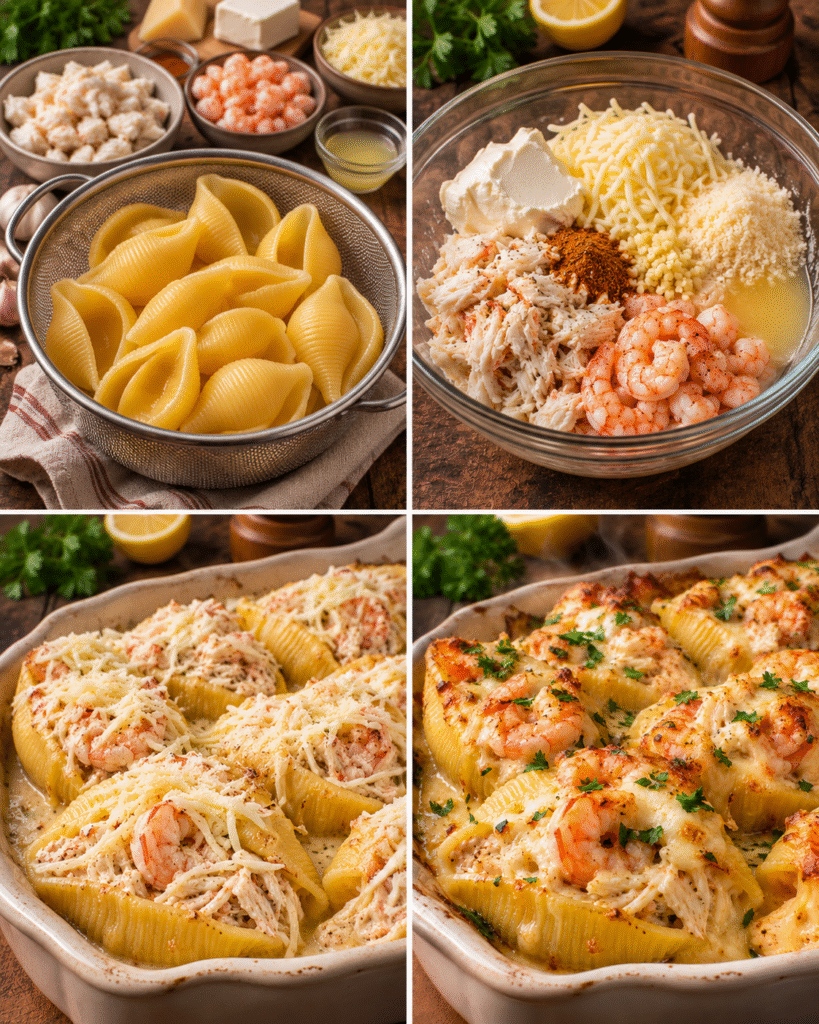
The recipe follows eight steps, beginning with cooking the pasta and ending with a baked, cheesy seafood filling.
Step 1: Preheat the Oven
Preheat your oven to 375°F (190°C).
Lightly grease a baking dish.
Choose a dish large enough to arrange all 20 stuffed shells in a single layer.
Set it aside while preparing the pasta and filling.
Step 2: Cook the Pasta Shells
Bring a large pot of salted water to a boil.
Add the jumbo pasta shells and cook until al dente according to the pasta package instructions.
The shells should be tender enough to fill without breaking but still firm enough to hold their shape.
Drain the pasta and allow it to cool slightly so it is easier to handle.
Arrange the shells separately if necessary to prevent sticking.
Step 3: Prepare the Creamy Seafood Filling
In a large mixing bowl, combine the lump crabmeat, chopped shrimp, softened cream cheese, half of the shredded mozzarella, grated Parmesan, minced garlic, lemon juice, and Old Bay seasoning.
Mix gently until the ingredients are evenly combined.
Use a large spoon or spatula to fold the mixture without breaking the lump crabmeat into excessively small pieces.
The filling should be thick and creamy, with recognizable pieces of seafood throughout.
Step 4: Stuff the Pasta Shells
Spoon the creamy seafood mixture into each cooked jumbo pasta shell.
Divide the filling evenly among the 20 shells.
Be generous enough to create a satisfying seafood center without overstuffing the pasta to the point that it tears.
Step 5: Arrange the Shells
Place the filled shells in a single layer in the prepared baking dish.
Position the open, filled sides upward so the cheese topping can melt over the seafood mixture.
Arrange the shells close enough to fit comfortably without squeezing or breaking them.
Step 6: Add the Remaining Mozzarella
Sprinkle the remaining mozzarella evenly over the stuffed shells.
The cheese will melt and help form a soft, lightly golden topping during baking.
Step 7: Bake Until Bubbly
Cover the baking dish with aluminum foil.
Bake at 375°F (190°C) for 20 minutes.
Carefully remove the foil, avoiding the hot steam.
Return the dish to the oven and bake uncovered for another 5–10 minutes, until the mozzarella is melted and the filling reaches an internal temperature of 165°F (74°C).
Check the center of a generously filled shell with a food thermometer.
The temperature is especially important because the original recipe doesn’t specify whether the chopped shrimp were raw or cooked before assembly.
Step 8: Garnish and Serve
Remove the baking dish from the oven.
Sprinkle the stuffed shells with freshly chopped parsley.
Serve warm, making sure each portion contains plenty of tender pasta and creamy shrimp-and-crab filling.
Tips for the Best Seafood Stuffed Shells
1. Cook the Pasta Al Dente
Pasta that is too soft can tear during filling or become mushy during baking.
Cook just until al dente, then drain.
2. Drain the Crabmeat Thoroughly
Lump crabmeat sometimes contains excess liquid.
Draining it prevents additional moisture from thinning the cream cheese filling.
3. Keep the Crab Pieces Intact
Fold the seafood mixture gently rather than stirring vigorously.
This helps preserve the texture of the lump crabmeat.
4. Soften the Cream Cheese Before Mixing
Softened cream cheese combines more easily with shredded mozzarella, Parmesan, lemon juice, and seasonings.
5. Don’t Overstuff the Shells
The filling should fit comfortably inside each pasta shell.
Excessively filled shells can tear or spill during baking.
6. Check the Center Temperature
The mozzarella may melt before the entire filling is thoroughly heated.
Use a food thermometer and check for 165°F (74°C).
Common Mistakes to Avoid
Overcooking the pasta: Soft shells are more likely to split when filled.
Using wet crabmeat: Drain the seafood to keep the filling rich rather than watery.
Overmixing: Excessive stirring can break the crabmeat into small fragments.
Overbaking: Since the recipe contains no separate sauce, prolonged baking may dry the exposed pasta edges.
Assuming the shrimp are precooked: The original ingredient list doesn’t specify their cooked state. Confirm the intended preparation before using the recipe.
Easy Variations and Substitutions
These optional ideas are separate from the original recipe.
Add a Creamy Garlic Sauce
A thin layer of garlic cream sauce beneath the shells could create a saucier version.
This would require additional ingredients and changes to the baking method, so it should be tested separately.
Add a Touch of Cajun Heat
A small amount of cayenne pepper or Cajun seasoning could provide extra warmth.
Try Fresh Chives
Chopped chives could be used instead of parsley for a mild onion-flavored garnish.
Add Lemon Zest
A little lemon zest could intensify the citrus flavor without adding extra liquid.
What to Serve With Seafood Stuffed Shells
These cheese-filled seafood shells make a rich main course, so lighter sides work well.
Fresh green salad: Crisp greens and lemon vinaigrette balance the richness of the cream cheese filling.
Roasted asparagus: Tender asparagus pairs naturally with shrimp and crab.
Steamed green beans: A simple vegetable side adds freshness.
Garlic bread: Warm garlic bread makes the meal more substantial.
For another seafood-and-cheese dinner, try Shrimp and Crab Seafood Quiche.
Make-Ahead Instructions
You can assemble the stuffed shells up to one day ahead, as described in the original recipe.
Place the filled shells in the prepared baking dish, cover securely, and refrigerate promptly at 40°F (4°C) or below.
Keep the raw or cooked seafood within its safe refrigerated storage period.
When ready to bake, follow the original covered and uncovered baking stages.
Additional baking time may be needed when the assembled dish is cold from the refrigerator.
Use a food thermometer to confirm that the center reaches 165°F (74°C).
How to Store, Freeze, and Reheat Leftovers
Refrigerating Leftovers
Transfer leftover seafood stuffed shells to shallow, airtight containers.
Refrigerate promptly at 40°F (4°C) or below.
Properly handled cooked seafood casseroles generally keep for 3–4 days in the refrigerator.
The safe storage period may be shorter if the cooked crabmeat was already several days old before preparing the recipe.
Can You Freeze Seafood Stuffed Shells?
The original recipe recommends freezing fully baked shells for up to two months.
After baking, cool the shells promptly and package them in airtight, freezer-safe containers.
Do not leave them at room temperature for extended periods while waiting for them to cool.
Freezing may slightly change the consistency of the cream cheese filling and pasta.
Thaw frozen portions safely in the refrigerator before reheating.
How to Reheat Stuffed Shells
Transfer refrigerated or safely thawed stuffed shells to an oven-safe dish.
Cover to help prevent the pasta from drying out.
Reheat until the center reaches 165°F (74°C).
Avoid prolonged reheating after the filling is thoroughly hot.
Frequently Asked Questions
Can I Use Frozen Shrimp?
Yes. Thaw frozen shrimp safely in the refrigerator before chopping.
Confirm whether the recipe is intended to use raw or precooked shrimp before assembling the filling.
Does the Crabmeat Need to Be Cooked First?
Use fully cooked, ready-to-eat lump crabmeat.
Check carefully for shells before adding it to the cheese mixture.
Can I Use Ricotta Instead of Cream Cheese?
Ricotta could be used as a variation, but it produces a different filling texture and changes the original recipe.
How Many Stuffed Shells Does This Recipe Make?
The recipe makes 20 jumbo stuffed shells and states 6 servings.
That works out to approximately three to four shells per serving, depending on portion size.
Why Are My Stuffed Shells Dry?
Because this recipe doesn’t contain a separate sauce, the exposed pasta edges may dry during baking.
Avoid overcooking the pasta or baking longer than necessary.
Can I Prepare the Shells the Night Before?
Yes. Assemble and refrigerate for up to one day, provided the seafood is fresh and safely stored.
Allow additional baking time if necessary to reach the required internal temperature.
More in Dinner Recipes
CREAMY CRAB AND SHRIMP STUFFED JUMBO PASTA SHELLS
Flaky Shrimp and Crab Cheese Seafood Rolls
Old Bay Crab Bisque with a Parmesan Finish