
Charleston She-Crab Soup with Aged Sherry & Lump Crab

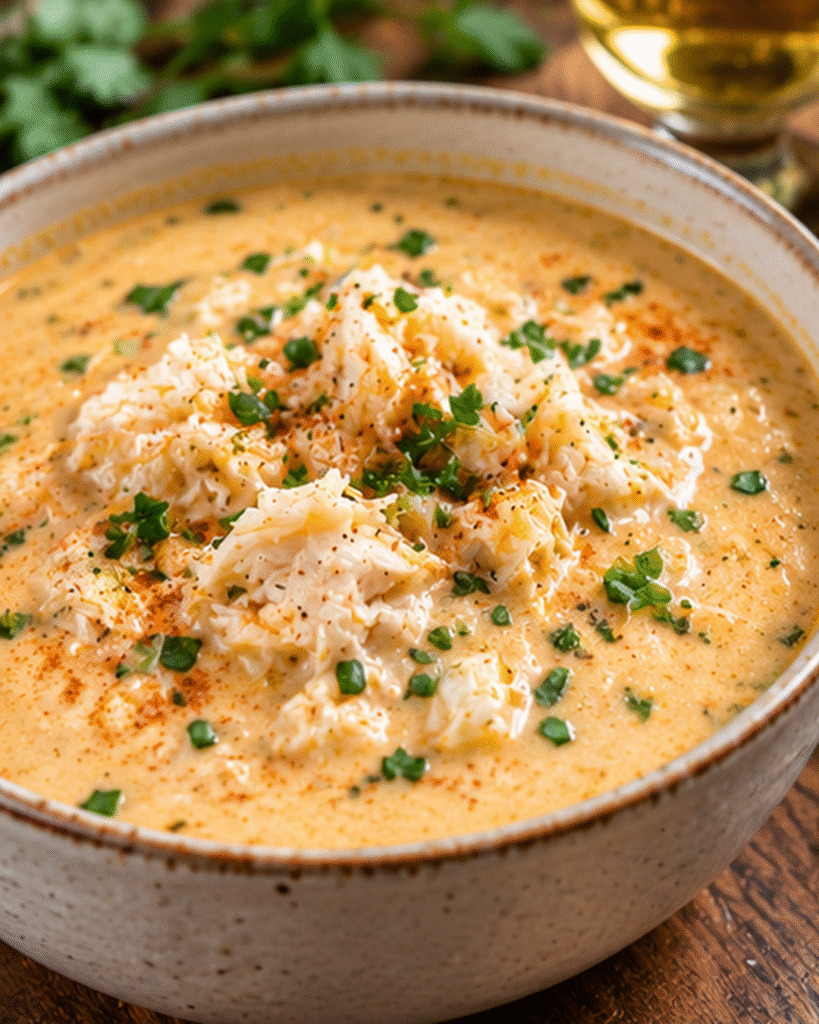
Rich, creamy, and filled with sweet, tender crabmeat, this Charleston She-Crab Soup with Aged Sherry & Lump Crab brings the flavors of South Carolina’s Lowcountry straight to your kitchen. Each spoonful combines delicate lump crab, a silky seafood broth, warm seasonings, and a distinctive splash of dry sherry.
The soup begins with butter, onion, celery, and garlic, followed by a light roux that gives the broth its smooth consistency. Seafood stock, whole milk, and heavy cream create a rich base, while Old Bay seasoning, paprika, white pepper, and a hint of nutmeg add depth without overpowering the crab.
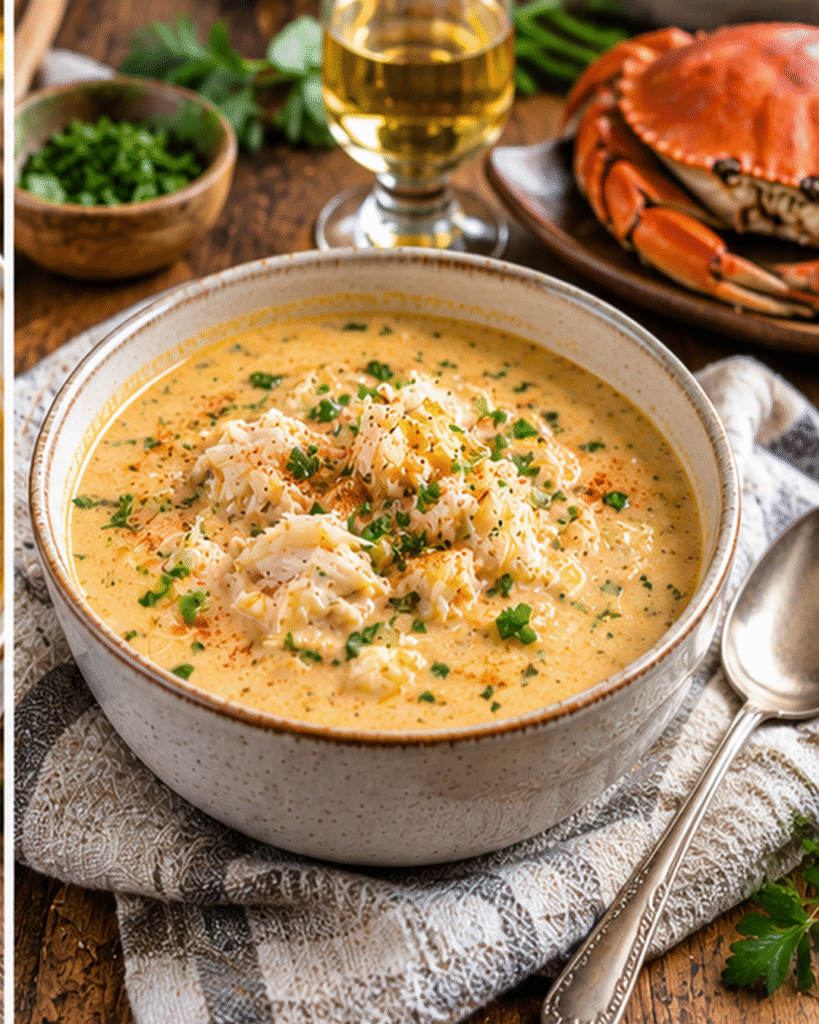
Finished with aged dry sherry, fresh lemon juice, and a sprinkle of chopped chives or parsley, this Charleston-inspired crab soup is a lovely choice for special occasions, holiday dinners, or a cozy meal at home.
Prep Time: 15 minutes
Cooking Time: 30 minutes
Total Time: 45 minutes
Why You’ll Love This Charleston She-Crab Soup
- Generous amount of crab: A full pound of lump crabmeat gives the soup plenty of sweet seafood flavor and tender pieces.
- Rich, velvety texture: Whole milk, heavy cream, butter, and a light roux create a smooth, creamy broth.
- Classic Lowcountry flavors: Seafood stock, Old Bay seasoning, Worcestershire sauce, and sherry complement the delicate crab.
- Ready in 45 minutes: The recipe uses straightforward stovetop steps and doesn’t require an extended simmer.
- Elegant enough for entertaining: Serve it as a starter for a seafood dinner or as a comforting main course with crusty bread.
- Simple finishing touches: Fresh lemon juice, aged sherry, and chopped herbs give the soup its final balance of flavor.
What Is Charleston She-Crab Soup?
She-crab soup is a traditional seafood specialty associated with Charleston, South Carolina, and the surrounding Lowcountry.
This rich soup is known for its creamy consistency, delicate crab flavor, and distinctive sherry finish.
Historically, traditional versions often included crab roe—the eggs of female blue crabs—which contributed additional flavor and color. Over time, cooks have created many variations, including recipes made with lump crabmeat and without roe.
This Charleston-inspired version uses a generous amount of lump crab, a cream-enriched seafood broth, and aged dry sherry.
What Makes This Version Special?
Three elements define the character of this recipe.
The creamy seafood base: Butter, a light flour roux, seafood stock, whole milk, and heavy cream create a smooth broth that complements the crab rather than overwhelming it.
The gentle seasonings: Old Bay, paprika, white pepper, nutmeg, and Worcestershire sauce add savory warmth and subtle complexity.
The sherry finish: Aged dry sherry is stirred into the soup after removing it from the heat, bringing a distinctively nutty, aromatic finish. Fresh lemon juice adds a little brightness.
Together, these ingredients create a rich, comforting soup with noticeable pieces of crabmeat in every serving.
Ingredients You’ll Need
This recipe uses familiar seafood soup ingredients with a few traditional Lowcountry-inspired touches.
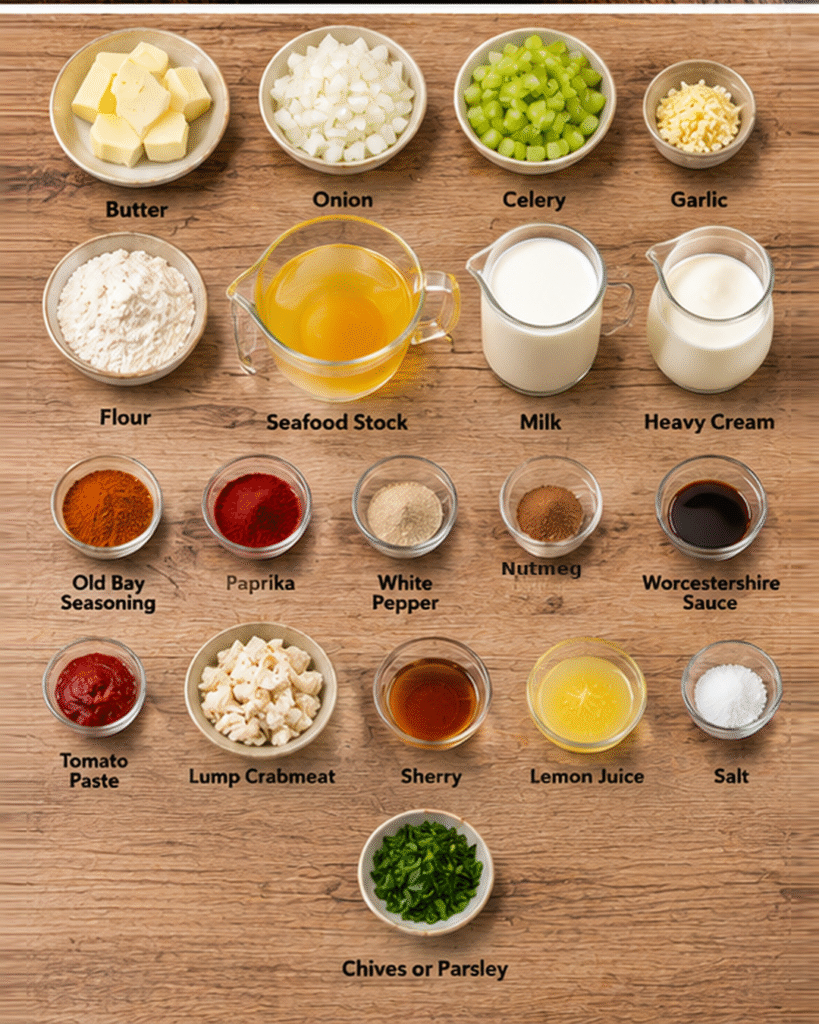
Complete Ingredient List
- 4 tbsp unsalted butter
- 1 small yellow onion, finely diced
- 2 celery stalks, finely diced
- 2 garlic cloves, minced
- ¼ cup all-purpose flour
- 3 cups seafood stock
- 1 cup whole milk
- 1½ cups heavy cream
- 1 tsp Old Bay seasoning
- ½ tsp paprika
- ¼ tsp ground white pepper
- ¼ tsp ground nutmeg
- 1 tsp Worcestershire sauce
- 1 tbsp tomato paste
- 1 lb lump crabmeat, picked over for shells
- ¼ cup aged dry sherry, plus more for serving if desired
- 1 tsp fresh lemon juice
- Salt, to taste
- 2 tbsp chopped fresh chives or parsley, for garnish
Helpful Ingredient Notes
Unsalted butter: Butter provides the base for gently cooking the vegetables and helps form the roux. Using unsalted butter allows more control over the final seasoning.
Yellow onion and celery: These finely diced vegetables contribute savory sweetness and flavor. Small pieces soften more easily and blend into the creamy soup.
Garlic: Freshly minced garlic adds aroma without dominating the delicate seafood.
All-purpose flour: Flour thickens the broth when cooked with butter and vegetables. Because this is a light roux, the goal is a smooth consistency rather than a dark, toasted flavor.
Seafood stock: Choose a flavorful seafood stock that complements crab. The stock adds savory depth beneath the milk and cream.
Whole milk and heavy cream: Together, they create a rich but pourable texture. The heavy cream contributes body, while the milk keeps the soup from becoming excessively thick.
Old Bay seasoning: This familiar seafood seasoning brings a savory spice blend that pairs particularly well with crab.
White pepper and nutmeg: White pepper adds gentle warmth, while the small quantity of nutmeg contributes a subtle aromatic note.
Tomato paste: A tablespoon gives the broth extra savory flavor and a slightly warmer color.
Lump crabmeat: Use fully cooked, ready-to-eat lump crabmeat. Check carefully for shell fragments and drain off excess liquid. Keeping larger pieces intact gives the soup a more satisfying texture.
Aged dry sherry: Dry sherry adds a characteristic finishing flavor. Choose a dry sherry intended for drinking or cooking rather than a sweet dessert sherry.
Fresh lemon juice: Lemon brightens the richness of the cream and balances the sweet crab.
Chives or parsley: Either herb makes an attractive garnish and contributes a fresh finishing note.
How to Make Charleston She-Crab Soup
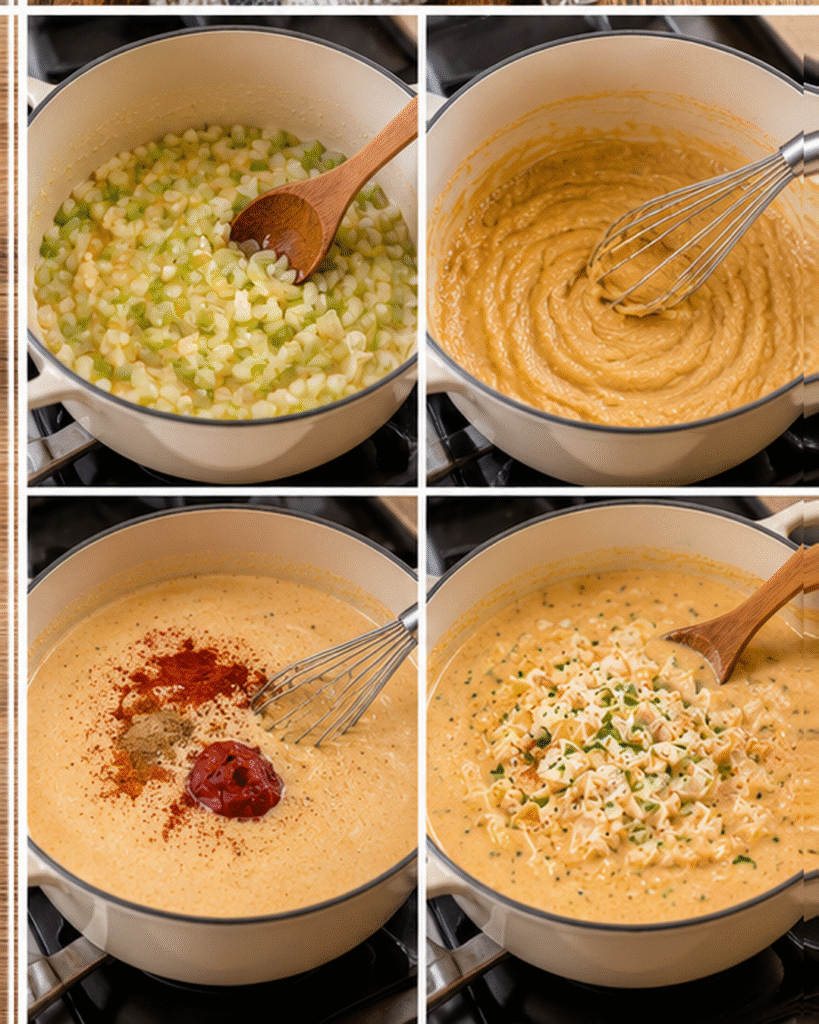
This soup comes together in ten steps. The key is to develop a smooth base, keep the dairy at a gentle simmer, and handle the crab carefully.
Step 1: Sauté the Onion and Celery
Melt the unsalted butter in a large saucepan or Dutch oven over medium heat.
Add the finely diced yellow onion and celery.
Cook for 4–5 minutes, stirring occasionally, until the vegetables soften.
The goal is to soften the vegetables without deeply browning them, allowing their flavors to blend into the creamy soup.
Step 2: Add the Garlic
Stir the minced garlic into the softened vegetables.
Cook for about 30 seconds, just until fragrant.
Stir frequently so the garlic doesn’t scorch in the butter.
Step 3: Make the Light Roux
Sprinkle the all-purpose flour over the vegetables.
Stir continuously for 1–2 minutes, allowing the flour to coat the vegetables and cook enough to lose its raw taste.
The flour and butter will form a lightly thickened mixture.
Unlike gumbo, this recipe doesn’t require a dark roux. Keeping the mixture relatively pale helps preserve the soup’s creamy appearance.
Step 4: Add the Seafood Stock
Slowly pour the seafood stock into the saucepan, adding a little at a time while whisking.
Continue stirring until the flour mixture blends smoothly with the liquid.
Adding the stock gradually helps reduce lumps and creates an even broth.
Step 5: Stir in the Milk and Cream
Add the whole milk and heavy cream.
Stir until completely combined, then reduce the heat to medium-low.
Keep the soup over gentle heat from this point forward to help prevent the dairy from separating.
Step 6: Add the Seasonings
Stir in the Old Bay seasoning, paprika, ground white pepper, nutmeg, Worcestershire sauce, and tomato paste.
Mix thoroughly until the tomato paste is dissolved and the seasonings are evenly distributed.
The broth should begin developing a warm, lightly golden color.
Step 7: Simmer Until Slightly Thickened
Continue cooking over medium-low heat for 10–12 minutes, stirring occasionally.
The soup should thicken slightly as the flour and dairy heat together.
Avoid a vigorous boil. A gentle simmer is enough to develop the flavors while keeping the cream smooth.
The finished base should have a silky, lightly thickened consistency that still pours easily from a ladle.
Step 8: Add the Lump Crabmeat
Gently fold the lump crabmeat into the hot soup.
Simmer for another 3–4 minutes, just until the cooked crab is heated through.
Use a gentle stirring motion so larger pieces of crab remain intact.
Avoid prolonged cooking, which can affect the delicate texture of the seafood.
Step 9: Finish With Aged Dry Sherry
Remove the saucepan from the heat.
Stir in the aged dry sherry and fresh lemon juice.
Taste the soup and add salt as needed.
Adding the sherry at the end preserves its distinctive aroma and flavor. Because it is added off the heat, this recipe should not be considered alcohol-free.
Step 10: Garnish and Serve
Ladle the hot soup into warm serving bowls.
Sprinkle with chopped fresh chives or parsley.
If desired, add a small splash of extra dry sherry to individual servings.
Serve immediately while the soup is hot and creamy.
Tips for the Best Charleston She-Crab Soup
1. Choose Good-Quality Lump Crabmeat
Crab is the main ingredient, so its flavor matters.
Look for cooked, ready-to-eat crabmeat with a fresh, pleasant aroma.
Check the meat carefully for shells and handle it gently to retain its natural pieces.
2. Keep the Roux Light
The roux in this soup serves mainly as a thickener.
Cook the flour for the recommended 1–2 minutes without allowing it to become dark brown.
A dark roux would change the flavor and appearance of the soup.
3. Add Stock Slowly
Whisking in the seafood stock gradually helps create a smooth broth.
If liquid is added too quickly, dry flour pockets may remain in the mixture.
4. Don’t Boil the Cream Vigorously
Once the milk and heavy cream are added, maintain a gentle simmer.
High heat can cause dairy-based soups to separate or develop a grainy texture.
5. Add Crab Near the End
Lump crabmeat is delicate and doesn’t need a long simmer when already cooked.
Adding it during the final few minutes keeps the larger pieces recognizable.
6. Finish With Sherry Off the Heat
The original recipe adds the sherry after the saucepan is removed from the stove.
This provides a more noticeable sherry aroma than adding it early in the cooking process.
7. Taste Before Adding Salt
Seafood stock, Old Bay seasoning, and Worcestershire sauce may already contribute sodium.
Taste the finished soup before adding any additional salt.
Common Mistakes to Avoid
Browning the roux too much: A dark roux changes the soup’s delicate flavor and color. Cook the flour only until the raw flour taste has softened.
Letting the cream boil vigorously: Strong boiling can affect the texture of the dairy. Keep the heat gentle during the original simmering steps.
Using watery crabmeat: Excess liquid from packaged crab can thin the soup. Drain it before adding.
Breaking apart the lump crab: Stirring aggressively can shred the crab into tiny pieces. Fold it in gently.
Overseasoning too early: Old Bay and seafood stock can already be salty. Make final adjustments after the soup has come together.
Easy Variations and Substitutions
These optional variations can change the flavor or texture of the soup. They are not part of the original recipe.
Use Claw Crabmeat
Claw crabmeat may be a more economical option in some markets.
It often has a stronger crab flavor and smaller pieces than lump crabmeat, so the finished soup will have a different texture.
Try a Lighter Dairy Combination
Replacing part of the heavy cream with additional milk is an option for a lighter variation.
However, this will produce a less rich soup and may require adjustment to achieve the desired consistency.
Add a Little More Heat
For those who enjoy a spicier seafood soup, a tiny pinch of cayenne pepper can be considered.
Use a light hand so the heat doesn’t overpower the crab.
Use Different Fresh Herbs
The original recipe allows chives or parsley.
Chives contribute a mild onion-like flavor, while parsley provides a fresher, grassy note.
What to Serve With Charleston She-Crab Soup
Because this soup is rich and creamy, simple side dishes work especially well.
Warm crusty bread: French bread, sourdough, or a warm dinner roll is wonderful for soaking up the creamy broth.
Oyster crackers: These provide a light crunch and make a familiar accompaniment to seafood soups.
Fresh green salad: A simple salad with a bright vinaigrette helps balance the richness of the cream.
Roasted asparagus: Lightly seasoned asparagus makes an appealing vegetable side for a seafood-centered meal.
Small seafood appetizers: For a special occasion, consider serving smaller portions of soup before a seafood entrée.
For another creamy seafood soup, explore Creamy Lobster, Shrimp and Crab Bisque, which features three kinds of seafood in a smooth, seasoned cream base.
How to Store, Freeze, and Reheat She-Crab Soup
Proper storage is particularly important because this soup contains seafood, milk, and heavy cream.
How Long Does She-Crab Soup Last in the Refrigerator?
Transfer leftovers into shallow, airtight containers and refrigerate promptly at 40°F (4°C) or below.
Properly handled cooked leftovers generally keep for 3–4 days in the refrigerator.
Because this soup contains crab, consider how fresh the cooked crabmeat was before preparation. Crabmeat that was already stored for several days should not automatically receive another four days of storage after being added to soup.
Do not leave the soup unrefrigerated for more than 2 hours, or more than 1 hour when the surrounding temperature exceeds 90°F (32°C).
Can You Freeze She-Crab Soup?
Freezing is not ideal for this creamy soup.
Heavy cream and milk can separate after thawing, creating a grainy texture. The crabmeat may also lose some of its delicate consistency.
If preparing the soup ahead for freezing, consider freezing the stock-and-vegetable base before adding the dairy and crab, then completing those stages after thawing.
This is a make-ahead variation rather than the original preparation method.
How to Reheat She-Crab Soup
Place the refrigerated soup in a saucepan over moderate heat.
Stir carefully as it warms to prevent sticking.
For food safety, previously cooked soups should be reheated thoroughly, reaching 165°F (74°C) and coming briefly to a boil. Remove from the heat promptly rather than boiling for an extended period, which may cause the cream to separate.
Reheat only the portion you plan to serve.
Frequently Asked Questions
What Makes She-Crab Soup Different From Regular Crab Soup?
Traditional Charleston she-crab soup is recognized for its rich, creamy base, crab flavor, and sherry finish.
Historically, female crab roe was an important distinguishing ingredient.
This modern Charleston-inspired version uses lump crabmeat without roe while retaining the cream and sherry elements.
Do I Need Crab Roe to Make This Soup?
No. The supplied recipe is designed around lump crabmeat and does not include roe.
It will still produce a creamy crab soup with Charleston-inspired flavors, although it differs from some traditional preparations.
What Kind of Crabmeat Is Best for She-Crab Soup?
Cooked lump crabmeat works well because it provides sweet flavor and noticeable pieces of crab.
Other cooked crabmeat varieties may be used as variations, but they can change the soup’s texture and flavor.
What Kind of Sherry Should I Use?
A dry sherry is the intended choice for this recipe.
Dry styles such as fino or amontillado can provide nutty or savory notes. Avoid substituting a very sweet dessert sherry if you want to keep the flavor close to the original.
Can I Make She-Crab Soup Without Sherry?
A sherry-free variation is possible, but it will change the soup’s characteristic flavor.
Because the original recipe specifically includes aged dry sherry, omitting it should be treated as a variation rather than the same recipe.
Can I Use Canned Crabmeat?
Yes, provided it is fully cooked, ready to eat, and suitable for the recipe.
Drain it well and check for shells. The texture may be different from fresh lump crabmeat.
Why Did My Creamy Crab Soup Separate?
Dairy-based soups may separate when heated too aggressively.
Keep the soup at a gentle simmer during the initial cooking process and avoid prolonged boiling.
Can I Make This Soup Ahead of Time?
Yes. The soup can be prepared ahead and refrigerated promptly.
For the best seafood texture, an alternative approach is to prepare the soup base in advance, then gently add and warm the cooked crabmeat closer to serving.
More in Dinner Recipes

Shrimp and Crab Seafood Quiche

Creamy Crab and Shrimp Puff Pastry Bites Recipe
