
Old Bay Crab Bisque with a Parmesan Finish

Rich, creamy, and filled with sweet lump crabmeat, this Old Bay Crab Bisque with a Parmesan Finish is a comforting seafood soup with a silky texture and delicate savory flavor. Tender onion, celery, and garlic create the aromatic base, while Old Bay seasoning, seafood stock, whole milk, and heavy cream build a smooth, flavorful broth.

What makes this crab bisque special is its finishing technique. The broth is blended until velvety smooth before the cooked crabmeat is gently folded in, leaving generous pieces of tender crab in every bowl.
A little freshly grated Parmesan and lemon juice complete the soup without overpowering the seafood. Ready in approximately 35 minutes, this elegant but approachable bisque is a lovely choice for cozy dinners, holiday appetizers, and special occasions.
Recipe at a Glance
Prep Time: 10 minutes
Cooking Time: 25 minutes
Total Time: 35 minutes
Servings: 4
Cooking Method: Stovetop
Course: Soup, Appetizer, Main Course
Why You’ll Love This Creamy Crab Bisque
- Generous lump crabmeat: A full pound of cooked lump crab gives the soup plenty of tender seafood in every serving.
- Silky, smooth broth: Blending the vegetables and thickened broth before adding the crab creates a velvety texture.
- Classic Old Bay flavor: Old Bay seasoning complements the sweetness of the crab without requiring a long list of spices.
- Delicate Parmesan finish: Finely grated Parmesan adds a savory note to the creamy broth.
- Ready in 35 minutes: The recipe uses straightforward stovetop steps and a short simmer.
What Makes This Crab Bisque Special?
A good crab bisque should be rich and creamy without losing the delicate flavor of the seafood.
This version begins by gently softening onion and celery in butter. Garlic, tomato paste, Old Bay seasoning, and flour are added to build a lightly thickened soup base.
Seafood stock or chicken broth provides the savory foundation, while whole milk and heavy cream contribute a soft, creamy consistency.
The important difference comes before adding the crab.
The cooked vegetable mixture is blended until smooth, removing the noticeable pieces of onion and celery from the broth. Only afterward is the lump crabmeat folded in.
This technique gives the bisque a smooth base while preserving recognizable, tender pieces of crab.
The finishing touches are simple: a small amount of Parmesan for savory depth, fresh lemon juice for brightness, and chopped herbs for a fresh garnish.
Ingredients You’ll Need
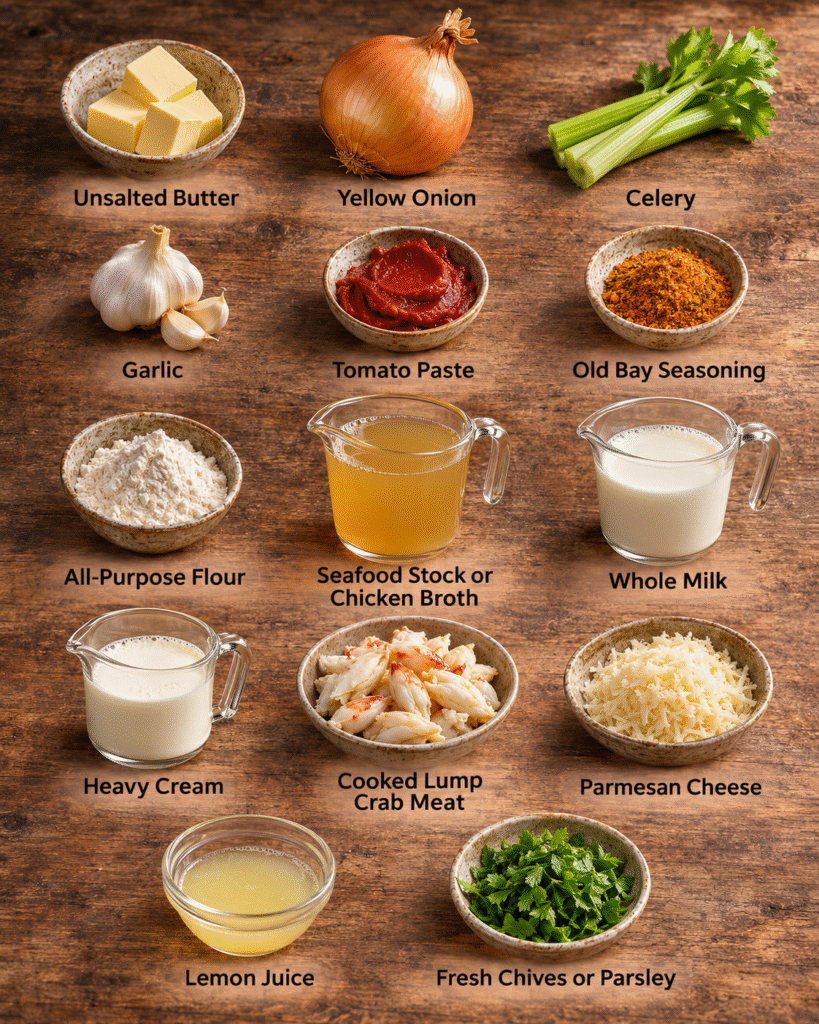
Complete Ingredient List
- 3 tablespoons unsalted butter
- 1 small yellow onion, finely diced
- 1 celery stalk, finely diced
- 2 garlic cloves, minced
- 1 tablespoon tomato paste
- 1 to 1½ teaspoons Old Bay seasoning, to taste
- 3 tablespoons all-purpose flour
- 2½ cups low-sodium seafood stock or chicken broth
- 1 cup whole milk
- ¾ cup heavy cream
- 1 pound cooked lump crab meat, drained and checked for shell fragments
- ¼ cup finely grated Parmesan cheese, plus more for serving
- 1 teaspoon fresh lemon juice
- 2 tablespoons chopped fresh chives or parsley
Helpful Ingredient Notes
Unsalted butter: Butter provides the base for gently cooking the vegetables and contributes richness to the soup.
Yellow onion and celery: Finely diced vegetables soften quickly and add subtle sweetness and savory flavor. They are blended into the broth before the crab is added.
Fresh garlic: Minced garlic adds aroma without overpowering the seafood.
Tomato paste: A tablespoon gives the bisque a little extra savory depth and a warm, slightly rosy color.
Old Bay seasoning: Start with the specified 1 teaspoon during cooking. The remaining ½ teaspoon can be added after tasting, if desired.
All-purpose flour: Flour thickens the broth as it simmers. The goal is a smooth, lightly thickened bisque rather than a heavy gravy.
Seafood stock or chicken broth: Seafood stock emphasizes the crab flavor, while chicken broth creates a milder base. A low-sodium variety helps control the final salt level.
Whole milk and heavy cream: Both contribute to the creamy consistency. The milk is added before blending; the cream goes in afterward.
Cooked lump crabmeat: Choose fully cooked, ready-to-eat lump crabmeat. Drain it well and check for shell fragments. Gently folding it in helps retain the larger pieces.
Parmesan cheese: Finely grated Parmesan melts more readily than large shreds. Add it after removing the soup from the heat.
Lemon juice: A small amount of lemon balances the richness of the milk, cream, and butter.
Chives or parsley: Fresh herbs add color and a subtle finishing flavor.

How to Make Old Bay Crab Bisque with a Parmesan Finish
This recipe follows five steps. The keys are to soften the vegetables, blend the broth before adding the crab, and stir in the Parmesan after removing the soup from the heat.
Step 1: Soften the Vegetables
Melt the unsalted butter in a heavy pot over medium heat.
Add the finely diced onion and celery.
Cook for 5–7 minutes, stirring occasionally, until the vegetables become soft.
Avoid deeply browning them. Softening the vegetables gently allows their flavor to blend into the creamy broth.
Stir in the minced garlic and cook for another 30 seconds, just until fragrant.
Step 2: Build the Flavor Base
Add the tomato paste and 1 teaspoon of Old Bay seasoning.
Stir and cook for 1 minute, until the tomato paste deepens to a brick-red color.
Sprinkle the all-purpose flour over the vegetables.
Continue stirring for another 1 minute.
The flour should combine with the butter and vegetables to form a thick mixture that will help give the broth body.
Step 3: Simmer and Blend the Broth
Slowly whisk in the seafood stock or chicken broth.
Begin with a small splash, stirring thoroughly to loosen the flour mixture and prevent lumps.
Continue adding the remaining stock gradually.
Pour in the whole milk and stir until combined.
Bring the mixture to a gentle simmer.
Cook for 8–10 minutes, stirring occasionally, until the broth thickens slightly and lightly coats the back of a spoon.
Remove the pot from the heat.
Using an immersion blender, carefully blend the mixture until the broth is completely smooth.
Keep the blending head submerged to minimize splashing. Switch the blender off before lifting it out of the hot soup.
The result should be a smooth, creamy base with no noticeable pieces of onion or celery.
Step 4: Add the Cream and Crab
Return the pot to low heat.
Stir in the heavy cream.
Gently fold in the cooked lump crabmeat, keeping the larger pieces intact.
Warm for 3–5 minutes, until the bisque is steaming and the crab is heated through.
Stir carefully.
Avoid vigorous boiling, which may affect the cream’s texture and break apart the delicate crabmeat.
Step 5: Finish With Parmesan and Lemon
Turn off the heat.
Sprinkle the finely grated Parmesan into the bisque a little at a time, stirring gently until melted.
Add the fresh lemon juice.
Taste the soup and add up to ½ teaspoon more Old Bay seasoning if desired.
Ladle the warm bisque into four serving bowls.
Finish with chopped fresh chives or parsley and a light grating of additional Parmesan.
Serve immediately.
Tips for the Best Crab Bisque
1. Use Fully Cooked Lump Crabmeat
The crab is added near the end of the recipe and warmed gently.
Use fully cooked, ready-to-eat crabmeat rather than raw crab.
2. Blend Before Adding the Seafood
This is the most important step for achieving a velvety bisque with tender crab pieces.
Blending after adding the crab would break up the larger lumps and change the intended texture.
3. Keep the Dairy at a Gentle Heat
The milk should simmer gently while the broth thickens.
After adding heavy cream, keep the heat low to minimize separation.
4. Add Parmesan Off the Heat
Turning off the heat before adding Parmesan helps it incorporate gently.
Use finely grated cheese and stir in small additions.
5. Taste Before Adding More Old Bay
Old Bay contains salt and other seasonings.
Start with the initial teaspoon, then adjust only after the soup is nearly finished.
6. Preserve the Crab Pieces
Fold the crabmeat in with a spoon or spatula rather than whisking vigorously.
Large, tender pieces provide a satisfying contrast to the smooth broth.
Common Mistakes to Avoid
Browning the vegetables too much: The onion and celery should soften gently rather than develop a dark caramelized flavor.
Adding stock too quickly: Gradually whisking in the liquid helps prevent flour lumps.
Blending the soup after adding crab: Blend first to preserve the lump crabmeat’s texture.
Boiling the cream aggressively: Keep the temperature gentle to help maintain a smooth soup.
Adding Parmesan over high heat: Remove the bisque from the heat before stirring in the cheese.
Easy Variations and Substitutions
These optional ideas are separate from the original recipe.
Use Chicken Broth Instead of Seafood Stock
The original recipe already allows low-sodium chicken broth.
This produces a milder broth, allowing the crabmeat to remain the main seafood flavor.
Add a Little More Old Bay
The recipe permits increasing Old Bay from 1 teaspoon to 1½ teaspoons after tasting.
Add gradually to avoid making the bisque too salty.
Try Fresh Parsley Instead of Chives
Both herbs are included in the original ingredient list.
Chives provide a mild onion flavor, while parsley gives a fresh herbal finish.
Add a Touch of Heat
A small pinch of cayenne pepper could be added as an optional variation.
Use sparingly so the spice doesn’t dominate the crab.
What to Serve With Crab Bisque
Crusty French bread: Warm slices are useful for dipping into the creamy broth.
Oyster crackers: A simple, crisp accompaniment that doesn’t overpower the delicate seafood flavor.
Fresh green salad: Crisp greens with a light lemon dressing balance the richness of the soup.
Roasted asparagus: A mild vegetable side pairs naturally with crab and Parmesan.
For another creamy crab soup, try Charleston She-Crab Soup with Aged Sherry & Lump Crab.
How to Store, Freeze, and Reheat Crab Bisque
Refrigerating Leftovers
Transfer leftovers into shallow, airtight containers.
Refrigerate promptly at 40°F (4°C) or below.
Properly handled seafood soups generally keep for 3–4 days, although the safe storage period may be shorter if the cooked crabmeat was already several days old.
Do not leave the bisque at room temperature for an extended period.
Can You Freeze Crab Bisque?
Freezing is possible, but not recommended for the best texture.
The milk, heavy cream, and Parmesan may separate or develop a grainy consistency after thawing.
The crabmeat may also become less delicate during reheating.
How to Reheat Crab Bisque
Transfer refrigerated bisque to a saucepan.
For food safety, bring leftover soup to a boil, ensuring it reaches 165°F (74°C) throughout.
Stir carefully and remove it from the heat promptly once thoroughly reheated to reduce the risk of prolonged boiling and changes in the dairy’s texture.
The soup may not be quite as smooth after reheating.
Frequently Asked Questions
Can I Use Canned Crabmeat?
Yes, provided it is fully cooked and ready to eat.
Drain well and check for shell fragments before adding it to the soup.
Why Is the Broth Blended Before Adding the Crab?
Blending removes the texture of the cooked vegetables and creates a smooth broth.
Adding the crab afterward preserves its larger, tender pieces.
Will Parmesan Overpower the Crab?
The original recipe uses only ¼ cup of finely grated Parmesan in the bisque.
This provides a light savory finish rather than making the soup heavily cheesy.
Can I Make This Bisque Without Seafood Stock?
Yes. The original recipe allows low-sodium chicken broth as an alternative.
Why Is My Crab Bisque Too Thick?
The flour and simmering stage thicken the broth.
If it becomes thicker than intended, additional liquid could be used as a variation, but the quantity would need to be adjusted to the finished consistency.

Final Thoughts
Old Bay Crab Bisque with a Parmesan Finish brings together the sweetness of lump crabmeat, savory seafood broth, gentle Old Bay seasoning, and a smooth cream base.
The carefully blended broth and light Parmesan finish make this a comforting seafood soup that feels special without requiring a lengthy cooking process.
Serve warm with crusty bread and a sprinkle of fresh herbs.
More Seafood Recipes to Try
- Charleston She-Crab Soup with Aged Sherry & Lump Crab — Creamy Lowcountry-inspired crab soup with Old Bay, aged dry sherry, and fresh herbs.
- Creamy Lobster, Shrimp and Crab Bisque — A rich bisque combining three kinds of seafood with a smooth tomato-seasoned cream base.
Old Bay Crab Bisque with a Parmesan Finish
A silky Old Bay-seasoned crab bisque with tender lump crabmeat, a creamy blended broth, fresh lemon, and a delicate Parmesan finish.
Ingredients
- 3 tablespoons unsalted butter
- 1 small yellow onion, finely diced
- 1 celery stalk, finely diced
- 2 garlic cloves, minced
- 1 tablespoon tomato paste
- 1 to 1½ teaspoons Old Bay seasoning, to taste
- 3 tablespoons all-purpose flour
- 2½ cups low-sodium seafood stock or chicken broth
- 1 cup whole milk
- ¾ cup heavy cream
- 1 pound cooked lump crab meat, drained and checked for shell fragments
- ¼ cup finely grated Parmesan cheese, plus more for serving
- 1 teaspoon fresh lemon juice
- 2 tablespoons chopped fresh chives or parsley
Instructions
- Soften the vegetables: Melt the butter in a heavy pot over medium heat. Add the onion and celery and cook for 5–7 minutes, stirring occasionally, until soft. Stir in the garlic and cook for 30 seconds.
- Build the base: Stir in the tomato paste and 1 teaspoon of Old Bay. Cook for 1 minute, until the paste turns brick red. Sprinkle the flour over the vegetables and stir for another minute.
- Simmer and blend: Slowly whisk in the stock, starting with a small splash to loosen the flour mixture. Add the milk and bring to a gentle simmer. Cook for 8–10 minutes, stirring occasionally, until the broth lightly coats the back of a spoon. Remove the pot from the heat and blend until smooth with an immersion blender.
- Warm the crab: Return the pot to low heat and stir in the cream. Gently fold in the crab, keeping the larger lumps intact. Warm for 3–5 minutes, until the bisque is steaming.
- Finish with Parmesan: Turn off the heat. Sprinkle in the Parmesan a little at a time, stirring gently until melted. Add the lemon juice, taste, and stir in up to ½ teaspoon more Old Bay if you like. Ladle into bowls and finish each with fresh chives and a light grating of Parmesan.
Notes
- Use fully cooked, well-drained lump crabmeat.
- Blend the broth before adding the crab.
- Remove the pot from the heat before using an immersion blender.
- Keep the cream at a gentle temperature rather than boiling vigorously.
- Stir in Parmesan off the heat.
- Taste before adding the optional extra Old Bay.
- Refrigerate leftovers promptly and use within 3–4 days when safely handled.
More in Dinner Recipes

Old Bay Crab Bisque with a Parmesan Finish

Cajun Shrimp and Crab Rice Casserole

Shrimp and Crab Seafood Quiche