
Zucchini Tomato Soup

To make the best zucchini tomato soup, I gently sauté zucchini and onion, then let them simmer with canned tomatoes, tomato paste, and a few simple ingredients until the flavors deepen beautifully. The soup finishes with a quick blend, heavy cream, and freshly grated Parmesan cheese. It’s ready in about an hour and offers a bright tomato taste that’s fresh and comforting all at once.
This zucchini tomato soup is a perfect blend of big, rich tomato flavor plus a sneaky boost of veggies. The process starts by sautéing onions and diced zucchini to create a tasty foundation, then simmering everything with canned tomatoes and a bit of tomato paste until the flavors deepen and come together. A quick whirl with the blender and finishing touches of heavy cream and grated Parmesan make the soup silky smooth, cozy, and all done in about an hour.
Here’s what you’ll discover:
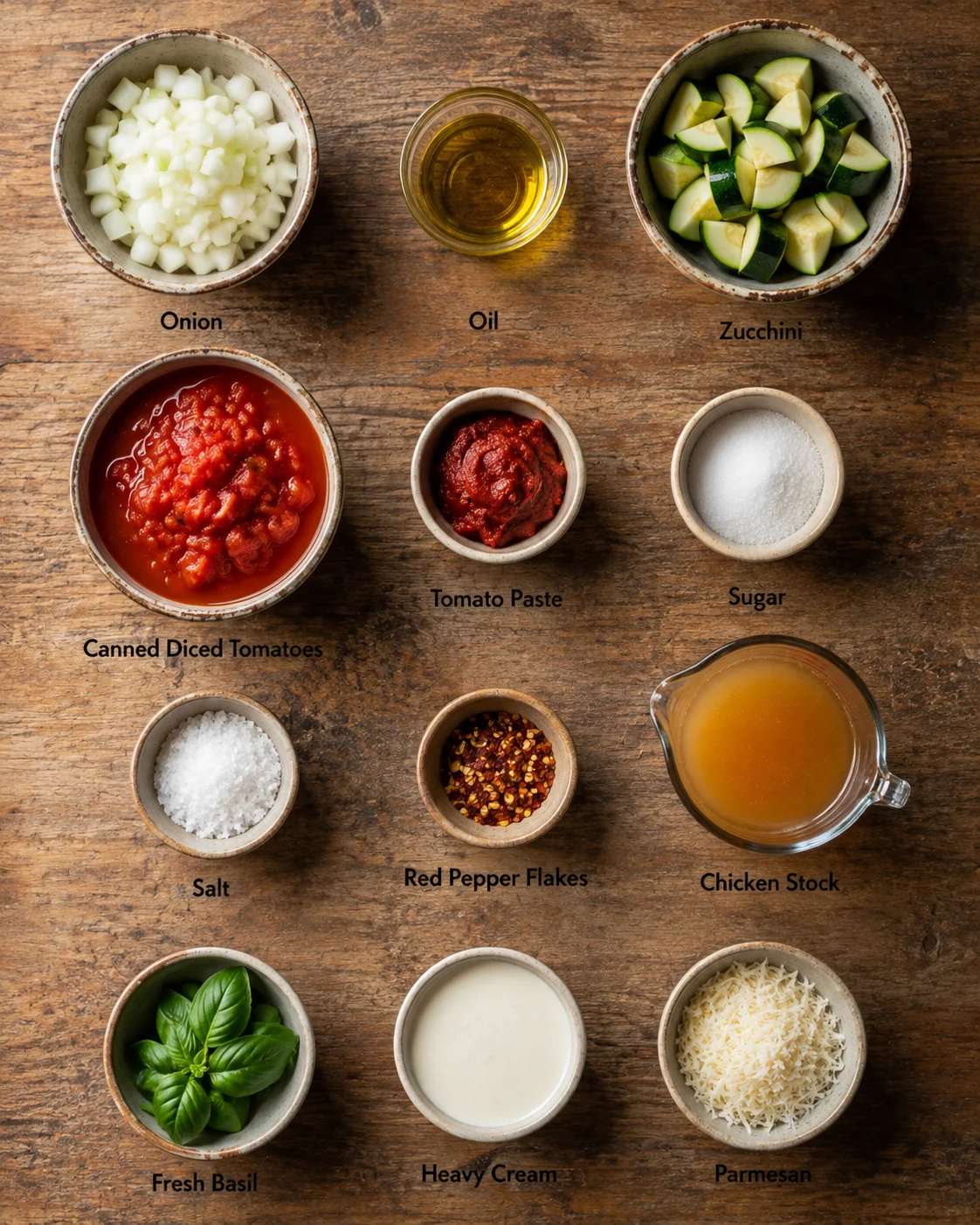
- A complete ingredient list with helpful notes, including why I prefer canned tomatoes, how to pick just the right zucchini, and why fresh Parmesan really makes a difference.
- Step-by-step photos and easy instructions on how to build your soup, simmer to perfection, and blend to the texture you love—whether chunky or velvety smooth.
- Ideas for serving and simple pairings (because grilled cheese is a no-brainer), plus handy storage, reheating, and freezing tips (freeze the soup base without adding cream or cheese).
- Smart troubleshooting and answers to common questions, so you avoid the usual mistakes like watery or bitter soup.
This recipe is an easy, welcoming way to use up your summer zucchini and deliver a warm, comforting bowl for cooler nights. It’s simple enough for weeknights yet delicious enough for company. Let’s dive in!
Why This Soup Works
- This is an easy and delicious way to sneak extra veggies into your meal, where zucchini blends perfectly without overpowering that classic tomato soup flavor you love.
- Sautéing the onion and zucchini first builds a deeper, more complex flavor base than just tossing everything in at once.
- Using canned tomatoes and tomato paste means you get bright, mellowed, concentrated tomato flavor year-round—no need to wait for fresh tomatoes at their peak.
- It’s creamy and thick enough to be comforting and satisfying, especially when you serve it alongside a buttery grilled cheese sandwich—browse our best soup recipes for winter if you’re craving more cozy ideas.
- Even though it’s from scratch, it’s really simple to make: just simmer till tender, blend, then stir in cream and cheese. Easy, flavorful, and very homey.
- This soup is perfect going into fall as it captures that fresh, summery zucchini flavor, warmed up in a cozy bowl. A great way to use up the glut of zucchini from the garden—or try our Garden Zucchini Casserole when you’re in the mood for baking!
- If you’re lucky enough to live in a warm climate year-round like me here in Florida, this soup works wonderfully as a light vegetable soup any time you want.
Ingredients and Prep Notes
- Onion — chop into small, even pieces so it cooks evenly and blends smoothly
- A little oil (for sautéing)
- Zucchini — chop into small cubes; pick smaller zucchinis (about 6–8 inches) since they’re sweeter and less bitter
- Canned Diced Tomatoes — choose ones without added herbs or spices (fire-roasted adds smoky depth)
- Tomato paste
- Pinch of sugar
- Salt
- Red pepper flakes
- Chicken stock — homemade or a good-quality low-sodium store-bought broth (warm before adding)
- Fresh basil (stir in for the last few minutes)
- Heavy whipping cream
- Parmesan cheese — freshly grated
Cook, Simmer, and Blend
- Chop the onion and zucchini into small, even pieces.
- Warm the chicken stock.
- Heat oil in a large pot over medium heat and sauté the onion until translucent.
- Add the diced zucchini and cook a few minutes until softened and lightly browned.
- Add the canned diced tomatoes and tomato paste, season with a pinch of sugar, salt, and red pepper flakes, and taste to adjust seasoning.
-
Pour in the warmed chicken stock, reduce heat to low, cover, and simmer 30–40 minutes until the zucchini breaks down and flavors concentrate.
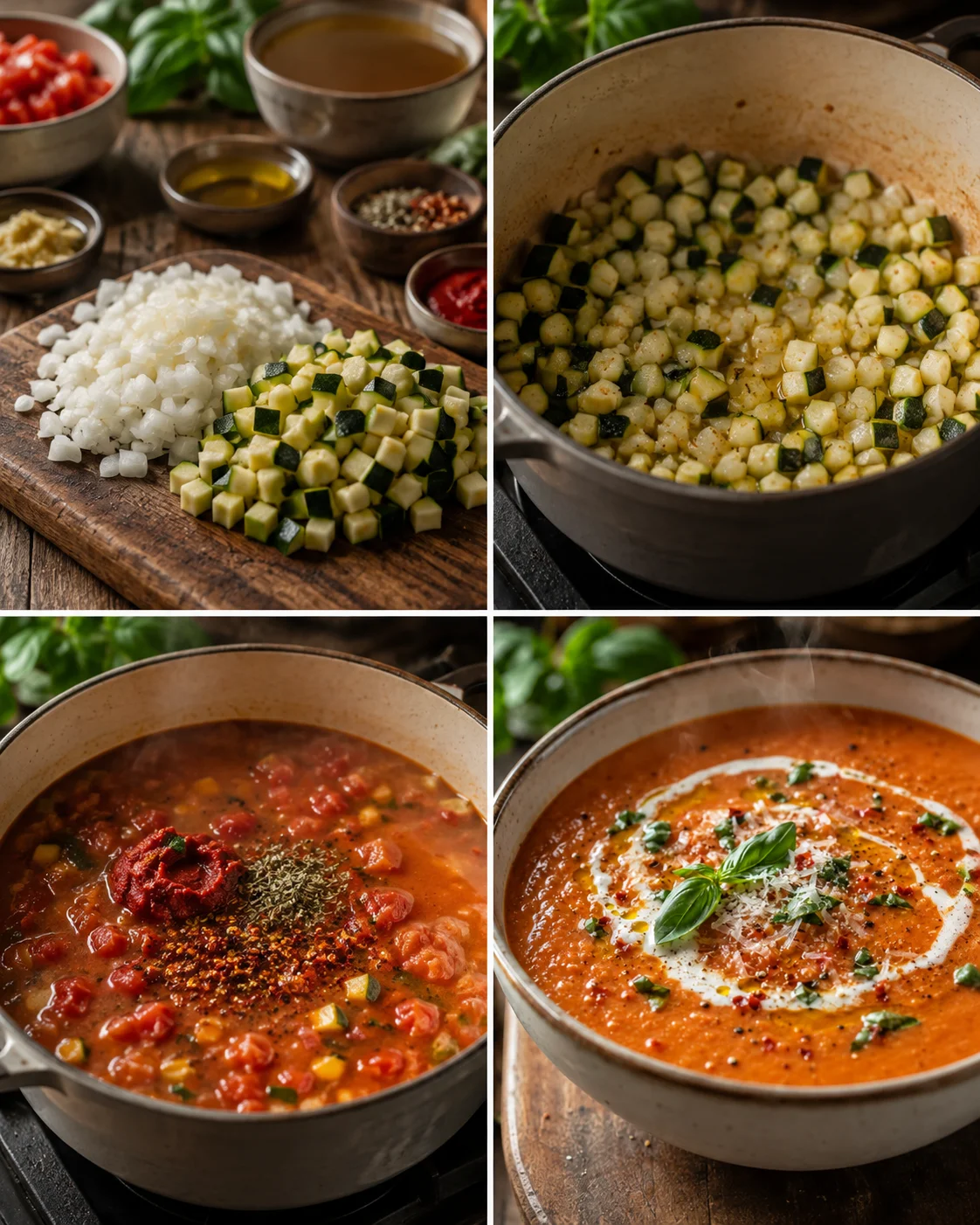
- Stir in fresh basil for the last few minutes of simmering.
- Remove the pot from heat and purée the soup with an immersion blender (or blend in batches) to your desired texture.
- Return the pot to medium-low heat, stir in heavy cream and grated Parmesan, taste and add more salt if needed, then cook 1–2 minutes before serving.
Helpful Tips and Troubleshooting
Here are some handy pointers and common mistakes you’ll want to avoid:
- Chop zucchini and onions into small, even pieces so they fully break down in the simmering step and blend up smooth.
- Don’t forget to sauté first. Browning your onions and zucchini adds a rich, roasted flavor that makes the soup taste homemade and extra special.
- If your zucchini tastes even a tiny bit bitter, peel it and scoop out the seeds. Taste a small raw piece before cooking; if it’s sharply bitter, toss it to be safe.
- Warm up your chicken stock before adding it to the pot. Starting with cold stock slows the simmer and lengthens your cooking time.
- If your soup feels watery after blending, simmer it uncovered for another 15-20 minutes to reduce the liquid—an approach used in our One Pot Creamy Vegetable Soup—before stirring in cream. Cream added too soon can make thickening tricky.
- When blending, turn off the heat first and keep the immersion blender fully submerged to avoid hot splatters. If using a regular blender, blend in small batches and keep a vent open for steam to escape.
- Use freshly grated Parmesan for the best melting and smooth finish. Pre-shredded can leave your soup grainy.
- Adjust the spice level with red pepper flakes, adding them little by little so you get just the right kick.
- If you want to use fresh tomatoes instead of canned, prepare for a longer simmer (up to 1 to 1.5 hours) to really concentrate flavors before adding tomato paste.
- For freezing, keep the cream and cheese out—they don’t freeze well. Freeze the base for up to 3 months, then add cream and cheese fresh when warming up later.
- When reheating refrigerated soup on the stove, keep the heat medium-low and stir often to prevent cream separation or scorching (these gentle-heat tips also work for creamy soups like Copycat Panera Chicken and Wild Rice Soup).
Variations and Serving Ideas
- Pair it with the classic combo: tomato soup and grilled cheese, or try Gougères for an elegant cheesy side. This zucchini twist tastes just as comforting and nostalgic.
- If you want something lighter, serve it alongside a fresh green salad tossed with a homemade Italian or green goddess dressing, or a simple Cucumber and Tomato Salad.
- This soup makes a lovely starter ahead of a pasta dinner too, sparking the appetite without filling you up too much.
If you want to shake things up a bit, here are some easy swaps and twists to keep that cozy, tomato-forward vibe while making the zucchini tomato soup your own.
- Vegetarian or vegan? No problem! Use a low-sodium vegetable stock instead of chicken. For a dairy-free creamy finish, swap heavy cream with canned full-fat coconut milk (this adds a subtle coconut hint) or make a cashew cream by blending soaked cashews with water. Replace Parmesan with nutritional yeast or a store-bought vegan parmesan alternative.
- Lighten the cream: Half-and-half works great as a swap for heavy cream if you want a lighter soup. Or skip cream entirely and stir in some butter or olive oil for richness instead.
- Tomato swaps: Fire-roasted canned tomatoes add smoky depth if you want a twist. Add an extra tablespoon or two of tomato paste for an even stronger tomato flavor. If you go fresh, remember that you’ll need to simmer longer (see FAQ for timing).
- Extra veggies: You can add mild, blendable veggies like yellow squash (a one-to-one swap for zucchini), peeled potatoes, cooked white beans (cannellini), or even a handful of frozen peas for a bit of sweetness. Just avoid large amounts of broccoli or cauliflower unless you want their stronger taste.
- Roast instead of sauté: Roast the zucchini and onion on a baking sheet until caramelized before adding them in for a deeper, slightly smoky flavor. Or hold some back sautéed zucchini to stir in at the end for a chunkier texture.
- Protein boost: Stir in shredded cooked chicken, cooked sausage, or drained canned white beans as you reheat to make the soup more filling.
- Seasoning twists: Add or swap spices like smoked paprika for warmth, a pinch of cumin for earthiness, or a splash of balsamic vinegar for brightness. Fresh herbs like basil or a spoonful of pesto stirred in at the end make a perfect finishing touch.
- Kid-friendly: Leave out the red pepper flakes and keep extra seasonings mild. A pinch of sugar can help balance very acidic tomatoes for sensitive palates.
- Freezing and make-ahead: If freezing, skip cream and cheese. Freeze just the soup base, then add your chosen dairy or dairy-free cream and Parmesan (or substitute) when you reheat.
- Nothing beats the classic combo of tomato soup and grilled cheese, and this zucchini tomato soup makes that pairing just as comforting and delicious.
- For a lighter meal, serve with a crisp green salad tossed in either green goddess dressing or your favorite homemade Italian.
- Use it as a flavorful starter before your pasta night dinner — it gets everyone ready for the main event without filling up too much.
Storing, Reheating, and Freezing
- Storage – Put any leftover soup in an airtight container or jar and refrigerate. It will keep well for 3 to 4 days.
- Reheating – Warm it gently on the stove over medium-low heat, stirring often so it doesn’t stick or scorch. Using the microwave? Heat in 45-second bursts, stirring in between, until heated through.
- Freezing – For best results, freeze the soup base without cream or Parmesan. Cool the soup quickly—either in an ice bath or at room temp for no more than two hours. Transfer to a freezer-safe container, leaving space for expansion, then freeze for up to 3 months.
- Thawing – Let the soup thaw slowly overnight in the refrigerator. When reheating on the stove, add back cream and cheese for that fresh, creamy finish.
- Storage – Store leftover soup in an airtight container and keep it refrigerated for 3 to 4 days.
- Reheating – Warm it gently on the stove over medium-low heat, stirring frequently so it doesn’t stick. The microwave works too — heat in 45-second increments and stir in between.
- Freezing – Freeze the soup base without cream or Parmesan. Cool quickly, place in a freezer-safe container leaving room for expansion, then freeze up to 3 months.
- Thawing – Defrost overnight in the fridge and add cream and cheese when reheating on the stove for that perfect finish.
Common Questions Answered
Is this tomato zucchini soup gluten-free?
Absolutely yes! All ingredients here are naturally gluten-free. As always, double-check any store-bought stocks or canned goods just to be safe. For a fully gluten-free pairing, serve it alongside baked zucchini fries (gluten-free, low-carb).
Can I add other vegetables?
Adding veggies to soup is a sneaky way to get your family eating more greens — I do this all the time! Easy-to-hide options include carrots, peas, yellow summer squash, and even a little broccoli or cauliflower. Since this is a blended soup, these mix right in. Just avoid large amounts of broccoli or cauliflower because they have a stronger flavor. If you’re craving a cozy bake that uses similar summer produce, try this zucchini, corn, and tomato bake with a Parmesan crust.
Can I use fresh tomatoes instead of canned in this recipe?
Sure! Though canned tomatoes give this soup its rich, steady flavor and smooth texture. If you want to use fresh, pick about 2 pounds of ripe tomatoes, peel and chop them, then simmer longer — about one to one and a half hours — so they break down and concentrate before adding tomato paste.
Why is my zucchini tomato soup watery instead of thick?
Zucchini holds a lot of water, so it can thin out your soup if not reduced. If your soup is thin after blending, let it simmer uncovered for 15–20 minutes more to cook off excess liquid, then stir in the cream.
Can I can this zucchini tomato soup for long-term storage?
Because this soup contains heavy cream and Parmesan, it’s not safe for home canning. Dairy changes the texture and heat distribution, so USDA doesn’t recommend canning cream-based soups. Freezing is your best bet for long-term storage.
Why does my zucchini taste bitter, and is it safe to eat?
A bit of bitterness usually comes from the zucchini plant reacting to heat, drought, or if the zucchini is overgrown. It’s harmless but not the most pleasant. Peeling and seeding can help. You can also slice and salt the zucchini, letting it sit in a colander for about 30 minutes to draw out bitterness. But if a raw bite tastes strongly bitter and unmistakable, that’s due to cucurbitacin, a natural compound that’s unsafe. Always taste a small raw piece before cooking, and if it’s very bitter, toss it.

[tasty-recipe id=”9913″
More in Desserts

Best Seafood Macaroni Salad

Creamy Lump Crab Bisque

Best Seafood Macaroni Salad
