Easy Gluten-Free Irish Soda Bread Recipe 5-Step Rustic Charm Guide

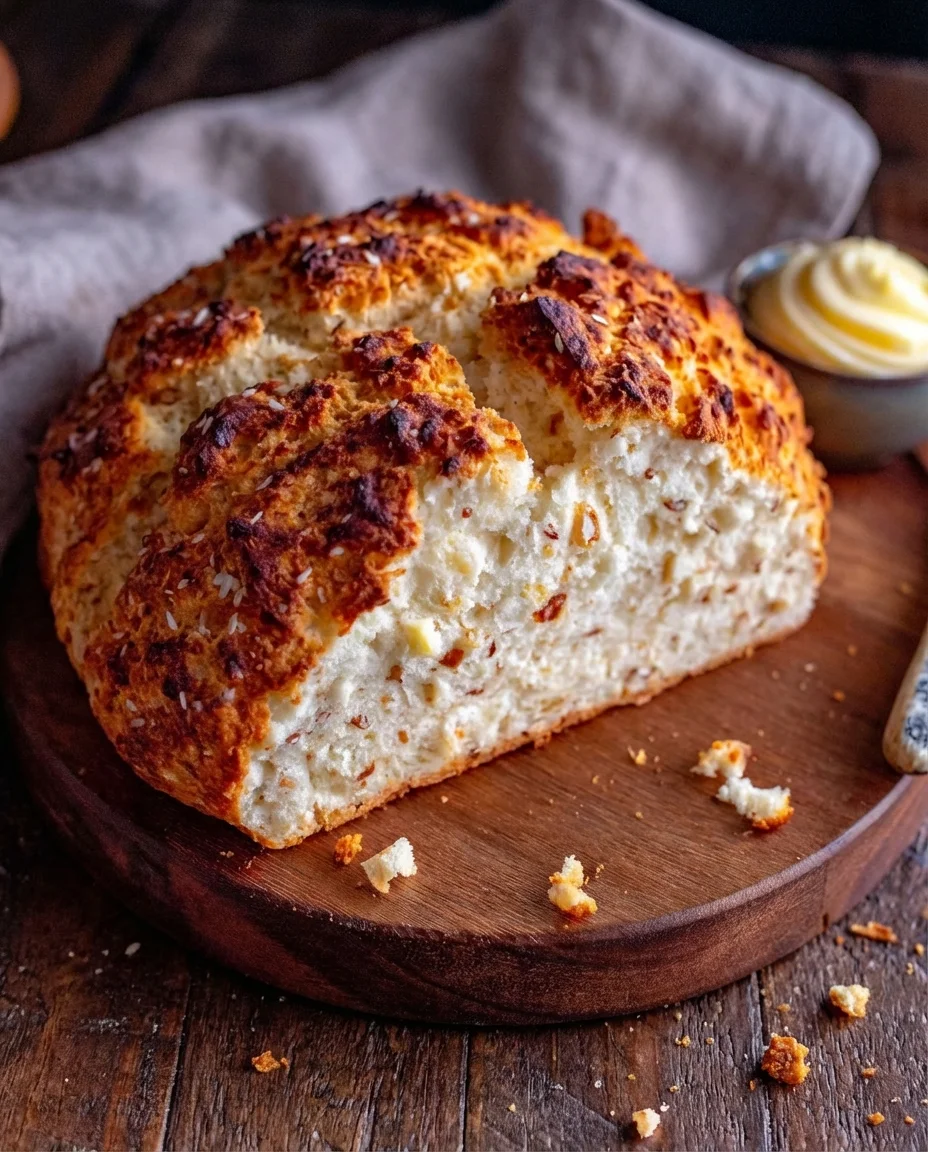
One chilly Sunday afternoon, the kitchen was filled with the smell of wood smoke while the rain gently tapped on the windows. That’s when I realized I forgot to pick up bread for dinner—classic me! With mostly gluten-free staples already in my pantry and a craving for something warm and comforting, I decided to bake a gluten-free Irish soda bread. Honestly, I wasn’t sure if it would turn out as cozy and hearty as the original.
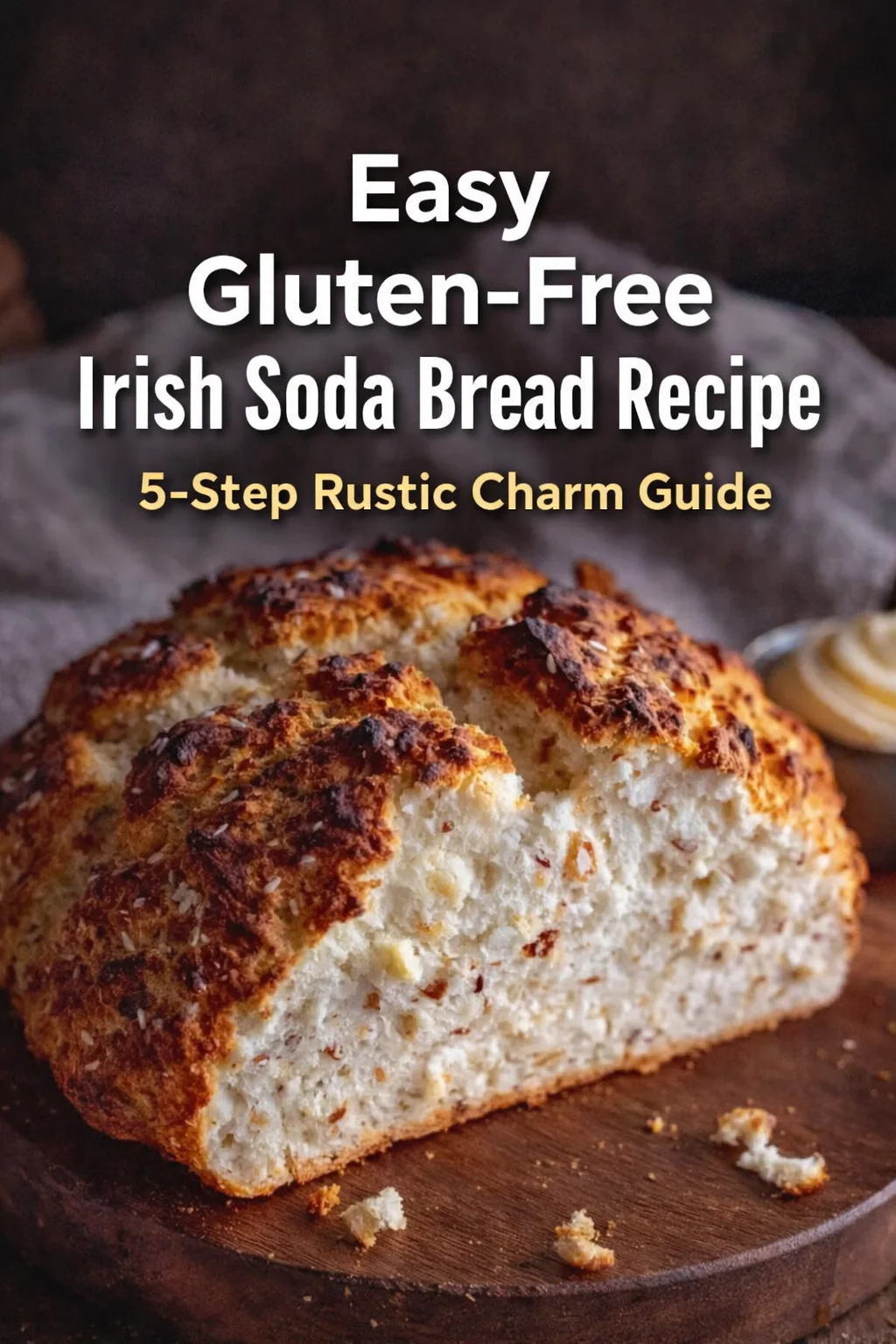
I mixed the ingredients with low hopes, thinking it might crumple or come out dry. But just minutes into baking, the kitchen was filled with this inviting, warm scent that reminded me of cozy stone cottages nestled in rolling green hills—comforting, even without gluten. When I finally sliced into that golden loaf, I was pleasantly surprised. It was tender yet firm, with a beautiful rustic crust that made me smile. It wasn’t just bread; that loaf felt like a little victory on a busy day.
That bread quickly became my go-to for a simple, fuss-free comfort food. This recipe stayed with me because it’s honest—no fancy tricks, no hard-to-find ingredients, just straightforward, delicious food with a sprinkle of Irish charm. It’s the kind of loaf you can throw together when you need a warm hug after a long day.
This easy gluten-free Irish soda bread is a recipe I revisit time and again when I want something simple but soulful. It has that genuine, rustic feel everyone loves without added mess or stress. Whether you’re new to gluten-free baking or just want a quick, tasty loaf that feels like home, this recipe won’t let you down.
Feel free to make it your own by adding herbs, seeds, or dried fruit. I love how versatile it is, while still keeping that classic character. It’s become a quiet favorite in my kitchen, and I hope it becomes one for you too.
Give it a try, share your thoughts, or tell me how you personalize this humble loaf—I’d love to hear your stories. Here’s to good bread and even better moments together.
Frequently Asked Questions
Is this Irish soda bread truly gluten-free?
Absolutely! By using a certified gluten-free flour blend and ensuring all your ingredients are gluten-free, this recipe is safe and tasty for anyone avoiding gluten.
Can I use regular flour instead of gluten-free?
You can, but keep in mind this recipe was crafted with gluten-free flours in mind. Traditional soda bread uses wheat flour, so you might need to tweak liquid amounts slightly if you substitute.
What if I don’t have buttermilk?
No problem! Simply mix 1 ¾ cups (420ml) of milk with 1 tablespoon of lemon juice or vinegar and let it sit for 5–10 minutes. This homemade buttermilk works just as well.
How do I know when the bread is done baking?
Look for a lovely golden-brown crust that feels firm to the touch. Give the bottom of the loaf a gentle tap—if it sounds hollow, it’s ready!
Can I freeze this bread?
Yes! Slice it first, then pack the slices tightly in airtight bags before freezing. You can toast or warm slices straight from the freezer for a quick snack.
Pin This Recipe!
When the air is chilly, smelling of rain and wood smoke, nothing beats a loaf that feels like a cozy hug. This gluten-free Irish soda bread fits the bill perfectly—simple, rustic, and super easy to make. I created this recipe with a pinch hit in mind, and now it’s a favorite I keep coming back to—no fuss, no fancy tools, just honest, good bread.
Keep reading and you’ll have everything you need to bake this loaf with confidence. The ingredients list is short: gluten-free flour, baking soda, buttermilk, an egg, and xanthan gum if your blend needs it. Plus, the method is straightforward—just five easy steps from mixing the dough to pulling a golden loaf out of the oven. I’ll also share helpful tips to dodge common gluten-free baking pitfalls. Expect a crunchy golden crust and a crumb that’s soft yet sturdy, ready for tasty additions like herbs, seeds, or fruit.
Whether you’re just starting with gluten-free baking or want a soulful, speedy loaf to pair with soup, cheese, or afternoon tea, this recipe has your back. I include ideas for dairy-free and vegan swaps, handy storage tips, and answers to all those little questions that pop up when making gluten-free soda bread for the first time.
Why You’ll Love This Loaf
- Quick & Easy: Just five simple steps, ready in under an hour—perfect when you want homemade without the hassle. Baking at elevation? See our authentic high-altitude Irish soda bread version.
- Simple Ingredients: Made from common pantry staples like gluten-free flour blends and baking soda, no urgent store run needed.
- Perfect for Cozy Occasions: Great for brunch, afternoon tea (try Hot Cross Buns for a classic treat), or as a comforting side dish with soups and stews.
- Crowd-Pleaser: Even friends who aren’t gluten-free ask for seconds. That crust and tender crumb never fail to impress.
- Unbelievably Delicious: The tangy buttermilk and hearty texture make it feel like true soul food, not just gluten-free bread.
- Unique Twist: Mixing gluten-free flours with xanthan gum keeps it moist and sturdy, avoiding crumbly, dry slices.
- Emotional Connection: Honest food that brings quiet joy—whether shared with the family or enjoyed alone with melting butter.
Ingredients and Simple Substitutions
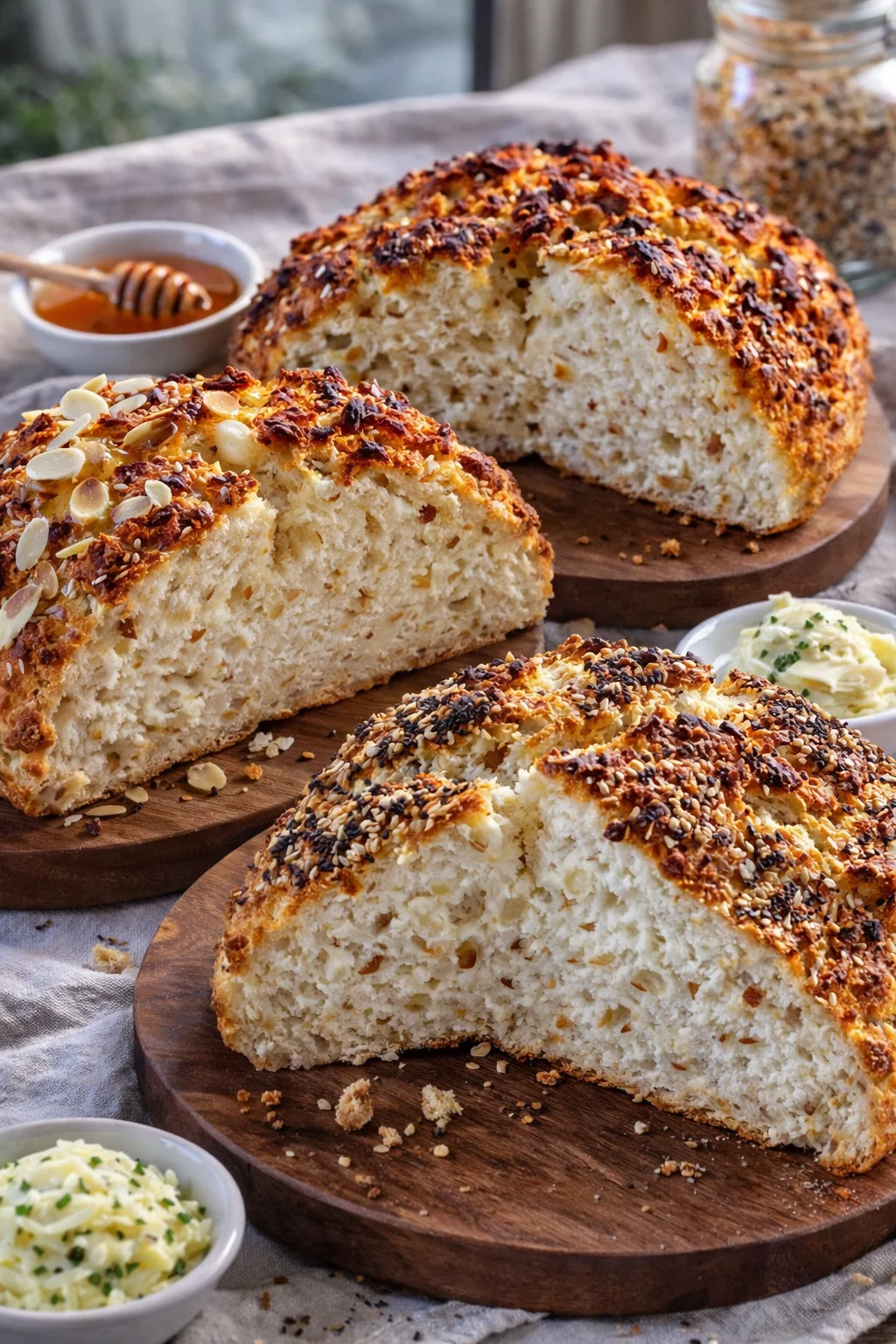
- 3 cups (360g) gluten-free flour blend
- 1 teaspoon (5g) baking soda
- 1 teaspoon (5g) baking powder
- 1 teaspoon (6g) salt
- 1 ¾ cups (420ml) buttermilk, room temperature
- 1 large egg, room temperature
- 1 tablespoon (15ml) honey (optional)
- ½ teaspoon xanthan gum (if your flour blend doesn’t already contain it)
How to Make the Loaf
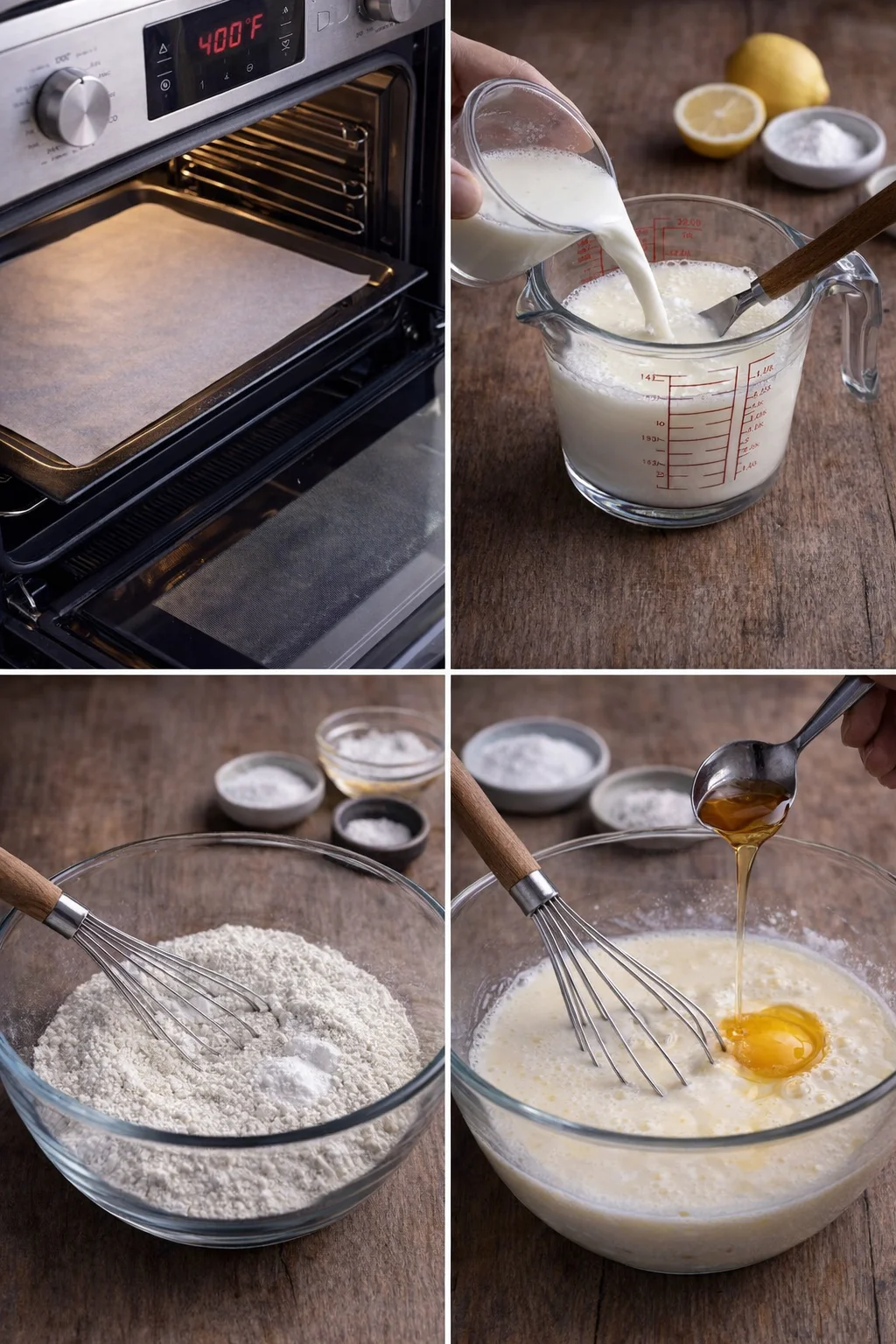
- Preheat your oven to 400°F (200°C). Line a baking sheet with parchment paper or lightly grease a cast-iron skillet.
- If you don’t have buttermilk handy, stir 1 tablespoon lemon juice or vinegar into 1 ¾ cups (420 ml) milk and let it sit for 5 to 10 minutes to thicken.
- In a large bowl, whisk together 3 cups (360 g) gluten-free flour blend, 1 teaspoon baking soda, 1 teaspoon baking powder, 1 teaspoon salt, and ½ teaspoon xanthan gum if your blend requires it.
-
In a separate bowl, beat 1 large room-temperature egg with 1 ¾ cups (420 ml) room-temperature buttermilk and 1 tablespoon honey.
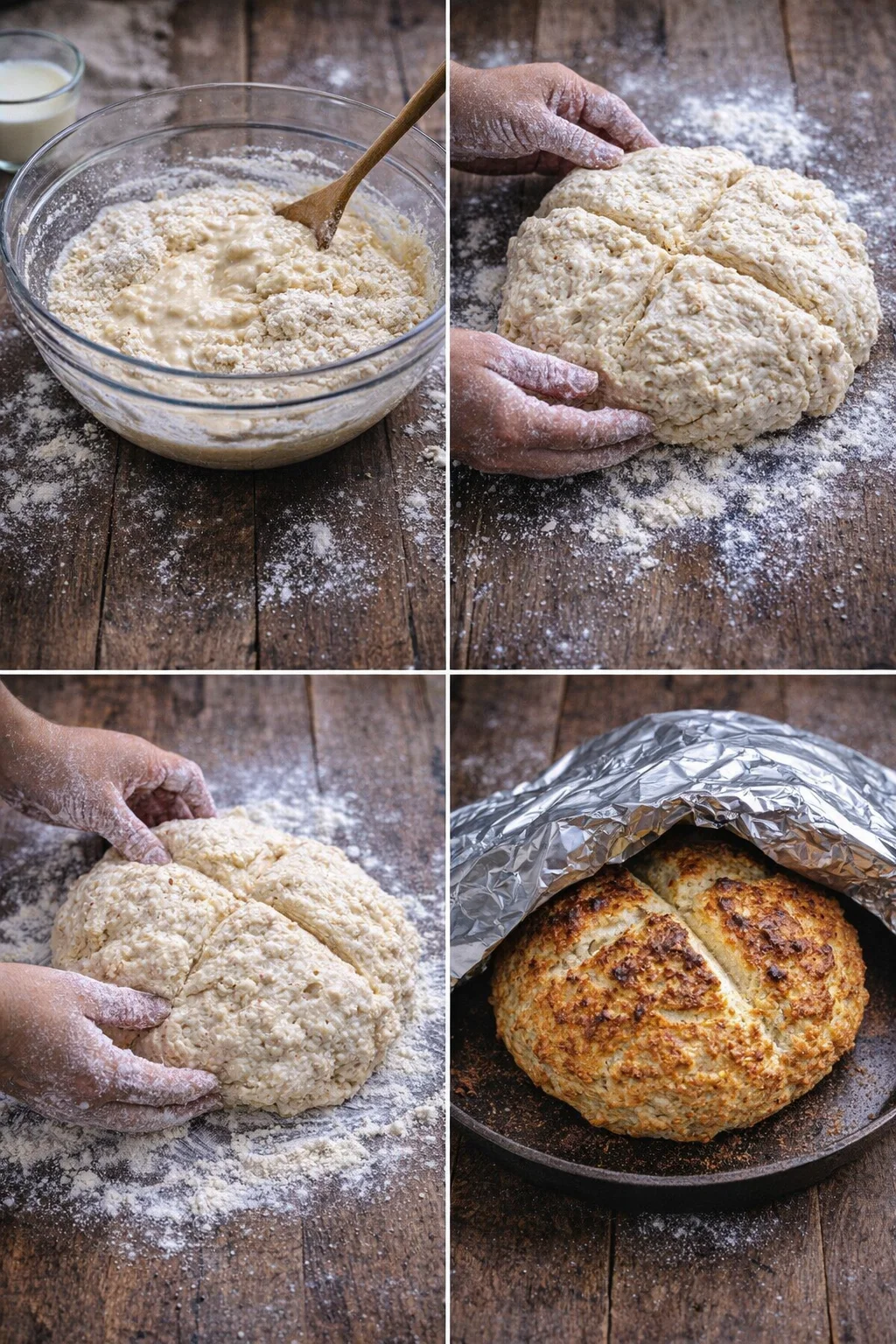
- Pour the wet ingredients into the dry mix. Gently fold them together with a wooden spoon or spatula until just combined. If the dough feels too wet, sprinkle in a little gluten-free flour, one tablespoon at a time. If it feels too dry, add a splash more buttermilk.
- Turn the sticky dough onto a lightly floured surface. With floured hands, gently shape it into a round about 7 inches (18 cm) wide.
- Transfer the round loaf to your prepared baking sheet or skillet. Score a deep cross roughly ½ inch (1.3 cm) deep across the top.
-
Bake for 35 to 40 minutes at 400°F (200°C). If the crust browns too quickly, tent the loaf loosely with foil halfway through baking.
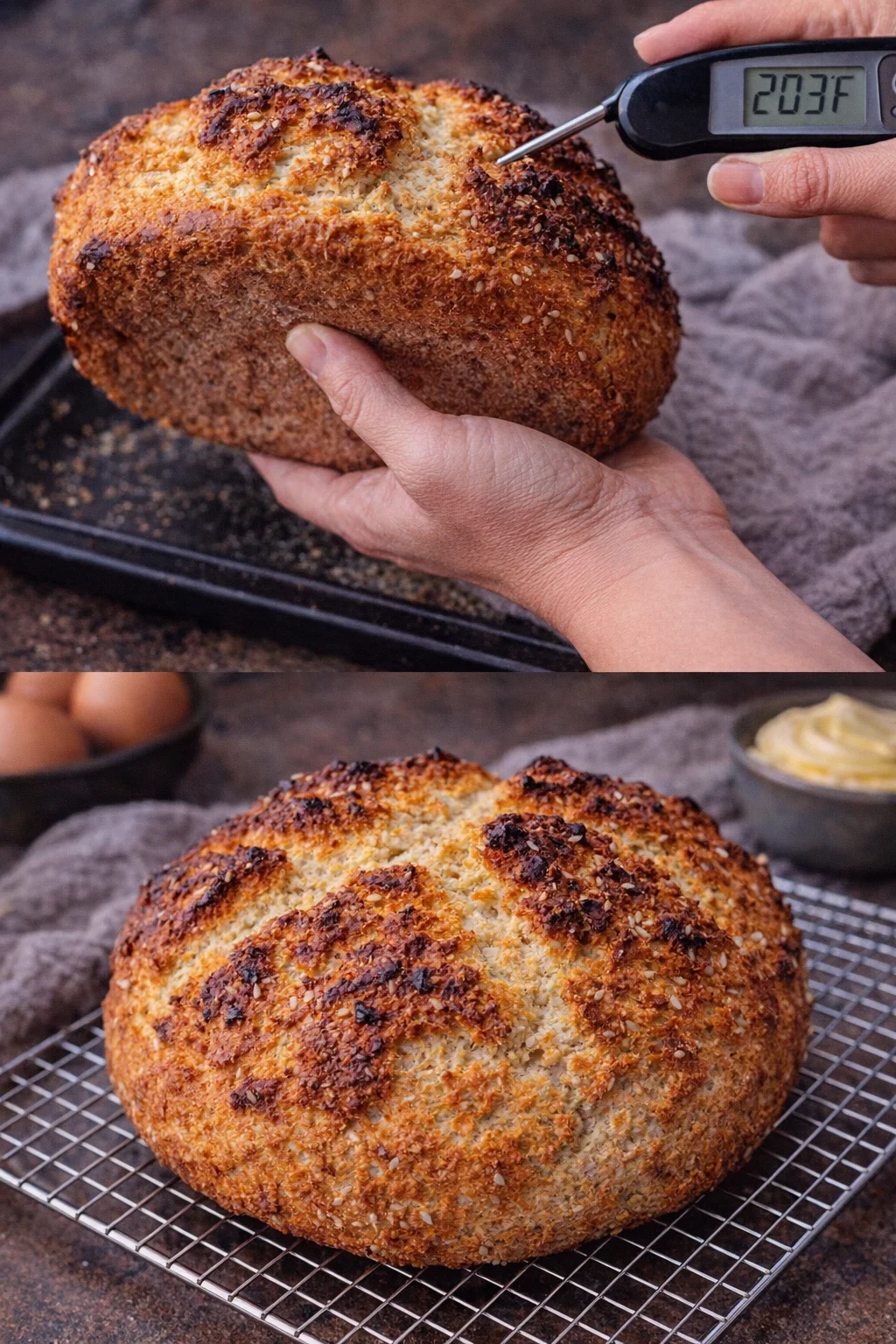
- Check doneness by tapping the bottom of the loaf—it should sound hollow. You can also use a kitchen thermometer; the internal temperature should be 200 to 205°F (93 to 96°C). Bake a few more minutes if needed.
-
Let the bread cool on a wire rack for at least 30 minutes before slicing.
Tips for Working with Gluten-Free Dough
Gluten-free dough can be a bit tricky—it’s stickier and more delicate than regular dough. So don’t knead this soda bread like yeast bread. The secret is gentle folding and quick shaping—much like making Irish cream scones.
Always measure your gluten-free flour blend carefully. Different brands absorb liquids differently, so if your dough feels wet, add a spoonful of flour at a time. If it seems dry, splash in some extra buttermilk.
Scoring the top may seem intimidating, but it’s actually a simple step that makes a big difference. That deep cross is not just for looks—it helps heat reach the center so your loaf bakes evenly all the way through.
Timing is key—don’t slice into the bread too soon! I’ve done it before and ended up with gummy slices. Waiting the full 30 minutes to cool makes all the difference for a perfect crumb.
Here’s a neat multitasking tip: while the bread bakes, tidy up the kitchen or whip up a simple soup like this 30-minute chicken cabbage soup or a salad. Before you know it, you’ll have a cozy, complete meal ready to enjoy.
Mix-Ins and Substitution Ideas
- Dairy-Free Version: Swap the buttermilk for almond milk mixed with 1 tablespoon lemon juice or apple cider vinegar. For a richer texture, coconut yogurt works great as a buttermilk substitute too.
- Herb-Infused: Toss in 1 tablespoon fresh chopped rosemary or thyme to the dry mix for a savory touch that pairs beautifully with stews or with Sweet Potato & Lentil Shepherd’s Pie.
- Sweet Version: Stir in ½ cup dried currants or chopped dried apricots and add an extra teaspoon of honey for a gently sweet loaf, perfect for breakfast or snacks. If you enjoy a savory-sweet loaf, try Apple Cheddar Bread.
- Whole Grain Boost: Substitute ½ cup of your gluten-free flour with buckwheat or sorghum flour to add some nuttiness and extra fiber.
- Personal Experiment: I once sprinkled toasted pumpkin seeds on top before baking for a nice crunch and rustic vibe—definitely worth trying if you like a little texture!
Storage, Freezing, and Reheating
This soda bread tastes best warm or at room temperature. Slather a slice with butter and maybe drizzle a little honey or sprinkle flaky sea salt on top. It’s delicious with hearty soups, creamy cheeses, or a simple bowl of stew.
Store any leftovers wrapped in a clean kitchen towel or airtight container at room temperature for up to 2 days. For longer storage, slice the bread and freeze the slices in zip-top bags for up to 3 months. To reheat, toast slices directly or warm them in a 350°F (175°C) oven for about 10 minutes to revive that lovely crust.
Bonus tip: The flavors actually mellow and deepen after about a day. If you can resist nibbling right away, you might find the next-day slices even better. Patience pays off!
Common Questions About This Recipe
Is this Irish soda bread truly gluten-free?
Yes! Just be sure to pick a certified gluten-free flour blend and double-check any baking powder, xanthan gum (if used), and add-ins to avoid gluten contamination.
Can I use regular wheat flour instead of gluten-free flour?
Of course, but this recipe was designed for gluten-free blends. Swapping in wheat flour might mean adjusting liquids and technique for the best texture.
What if I don’t have buttermilk?
Mix 1 tablespoon lemon juice or vinegar into 1 ¾ cups (420 ml) milk and let it sit 5–10 minutes to thicken. For a dairy-free option, try thick plant milks like almond or oat with the same acid, or thin coconut or soy yogurt with a little water.
Do I really need xanthan gum?
If your gluten-free flour blend already contains xanthan gum, you can skip adding extra. If not, about ½ teaspoon helps the dough hold together and improves the texture.
How do I tell when the bread is done?
The crust should be a rich golden color and firm to the touch. A tap on the bottom should sound hollow. An internal temperature between 200–205°F (93–96°C) means it’s perfectly baked.
Can I make this dairy-free or vegan?
Dairy-free is easy! Use plant milk plus lemon juice or vinegar or dairy-free yogurt instead of buttermilk. Vegan baking is trickier since the egg adds richness and helps bind. You can try a flax or chia “egg” (1 tablespoon ground flaxseed + 3 tablespoons water) or aquafaba, but expect a slightly different crumb and consider adding extra xanthan gum for structure.
How should I store and freeze leftovers?
Wrap leftover bread in a clean towel or airtight container at room temperature for up to 2 days. For longer storage, freeze sliced bread in zip bags for up to 3 months. Reheat slices in a 350°F (175°C) oven for 8–10 minutes or toast directly from frozen.
Can I add mix-ins like dried fruit, seeds, or herbs?
Absolutely! Stir in up to ½ cup of dried fruit like currants or raisins, or fold in a tablespoon of chopped fresh herbs like rosemary or thyme for a savory twist. For herb-forward savory baking inspiration, try our Pumpkin Tart with Caramelized Onions and Pumpkin Seed Gremolata. Fold gently to keep the dough light and fluffy.
Cast iron skillet or baking sheet — which is better?
Both work great. A cast iron skillet gives you a slightly crispier, more rustic crust, while a parchment-lined baking sheet is easier to handle and still produces a lovely loaf.
PrintAn easy and quick gluten-free Irish soda bread with a tender crumb and rustic crust, perfect for cozy occasions and adaptable for various dietary needs.
- Prep Time: 15 minutes
- Cook Time: 35-40 minutes
- Total Time: 50-55 minutes
- Yield: 1 loaf, about 8-10 servings 1x
- Category: Bread
- Cuisine: Irish
Ingredients
- 3 cups (360g) gluten-free flour blend
- 1 teaspoon (5g) baking soda
- 1 teaspoon (5g) baking powder
- 1 teaspoon (6g) salt
- 1 ¾ cups (420ml) buttermilk, room temperature
- 1 large egg, room temperature
- 1 tablespoon (15ml) honey (optional)
- ½ teaspoon xanthan gum (if your flour blend doesn’t contain it)
Instructions
- Preheat oven to 400°F (200°C). Line a baking sheet with parchment paper or lightly grease a cast-iron skillet.
- If you don’t have buttermilk, mix 1 tablespoon lemon juice or vinegar into 1 ¾ cups (420 ml) milk and let sit for 5-10 minutes to thicken.
- In a large bowl, whisk together gluten-free flour blend, baking soda, baking powder, salt, and xanthan gum (if needed).
- In a separate bowl, beat the egg with room-temperature buttermilk and honey.
- Pour wet ingredients into dry mixture and gently fold with a wooden spoon or spatula until just combined. Adjust by adding a tablespoon of gluten-free flour if too wet, or a splash of buttermilk if too dry.
- Turn dough onto a lightly floured surface and gently shape into a 7-inch (18 cm) wide round.
- Transfer the dough to prepared baking sheet or skillet and score a deep cross about ½ inch (1.3 cm) deep on top.
- Bake for 35-40 minutes. Tent with foil if crust browns too quickly.
- Check doneness by tapping the bottom of the loaf (should sound hollow) or using a kitchen thermometer; internal temperature should be 200-205°F (93-96°C).
- Cool bread on a wire rack for at least 30 minutes before slicing.
Notes
Use a certified gluten-free flour blend and verify all ingredients are gluten-free to ensure safety for gluten-free diets., Xanthan gum is optional depending on your flour blend but helps improve texture and structure., For dairy-free version, substitute buttermilk with almond milk and 1 tablespoon lemon juice or vinegar or use coconut yogurt., For a sweet version, add ½ cup dried currants or chopped dried apricots and increase honey by 1 teaspoon., Herb variations: add 1 tablespoon fresh chopped rosemary or thyme into dry mix for a savory touch., Bread can be stored wrapped in a towel or airtight container at room temperature for 2 days., Freeze sliced bread in zip-top bags for up to 3 months and reheat by toasting or warming in a 350°F (175°C) oven for 8-10 minutes., Avoid slicing bread before it cools fully to prevent gummy texture., For vegan option, substitute egg with flaxseed egg (1 tbsp ground flaxseed + 3 tbsp water) or aquafaba but texture may vary and additional xanthan gum might be needed.
Nutrition
- Serving Size: 1 slice
- Calories: Approximately 190 calories per slice
- Fat: 3 grams per serving
- Carbohydrates: 35 grams per serving
- Protein: 5 grams per serving
More in Breakfast Recipes
Wholesome Blueberry Quinoa Breakfast Bake – Mix Recipes Finds
Cozy and Sweet Honey Cinnamon Dessert
Quinoa Pancakes