
Classic San Francisco Cioppino Seafood Stew

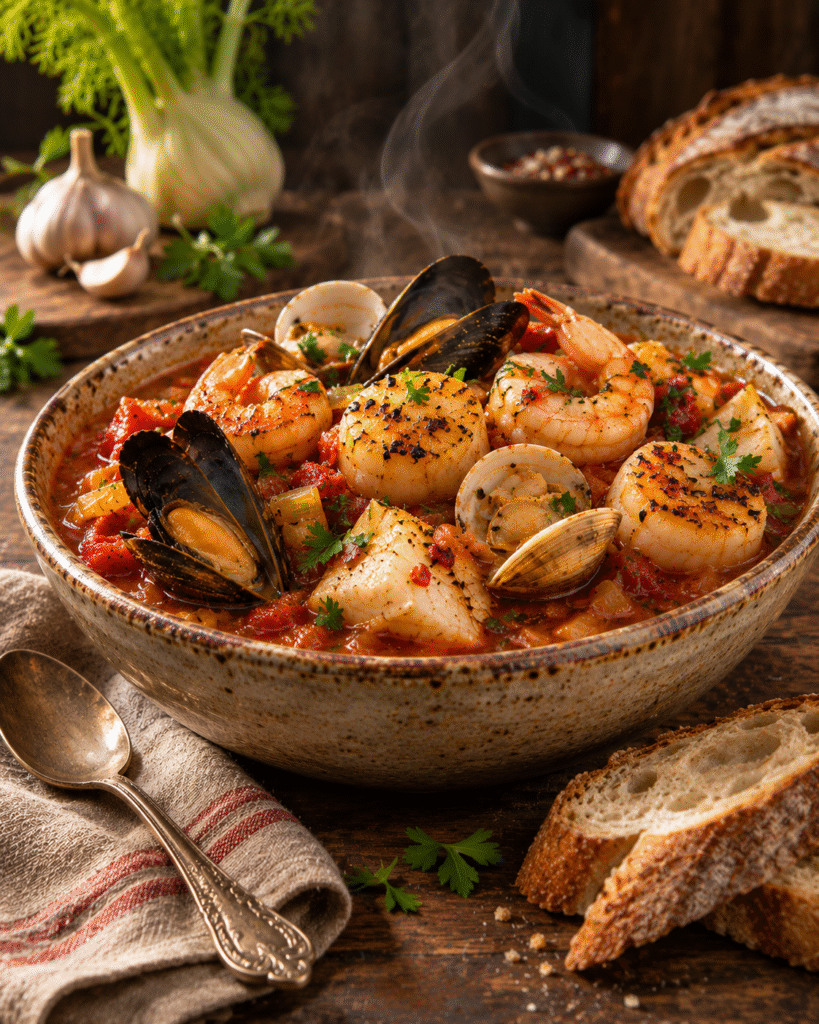
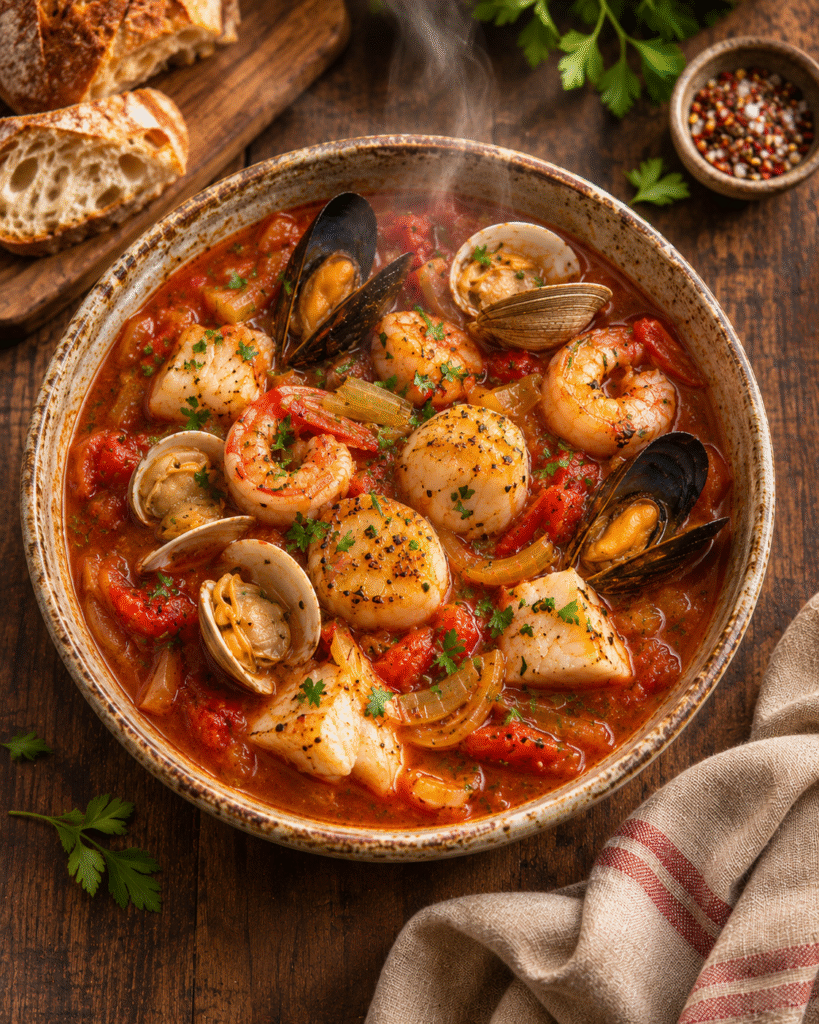
Rich, aromatic, and brimming with fresh seafood, this Classic San Francisco Cioppino Seafood Stew combines tender white fish, juicy shrimp, sweet sea scallops, littleneck clams, and mussels in a savory tomato and white wine broth. Every spoonful brings together delicate seafood flavors, sweet onion, fennel, garlic, and herbs.
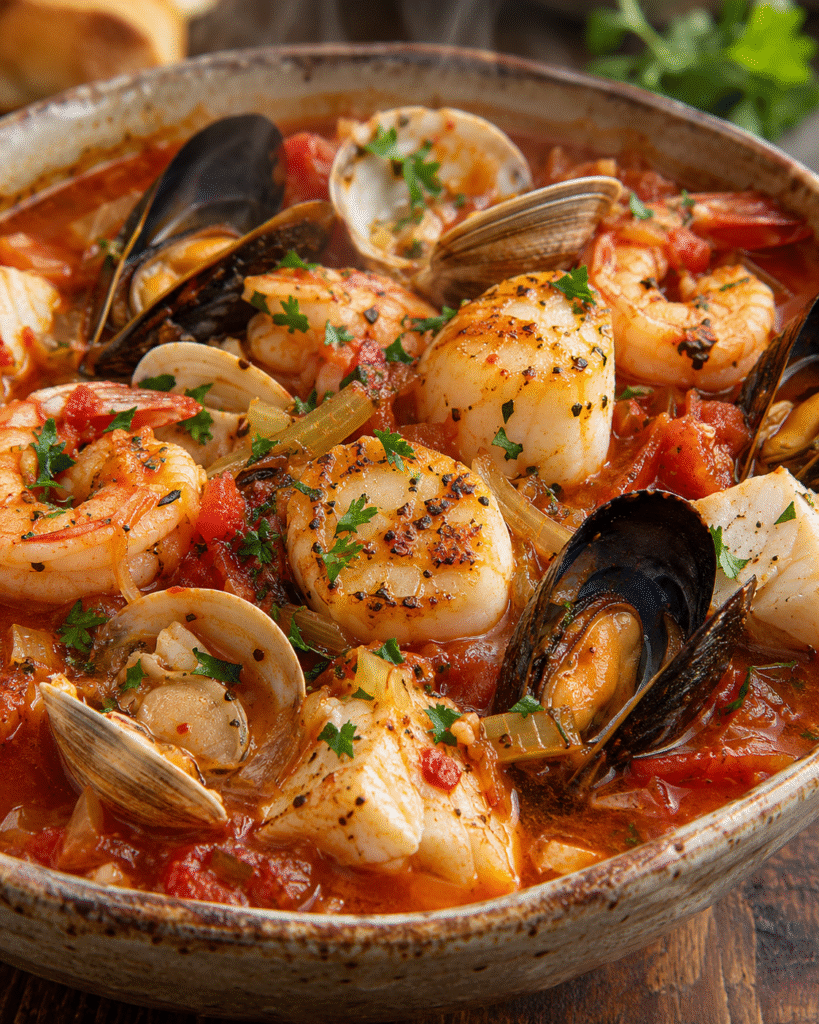
The broth begins with butter, onion, fennel, and tomato paste, then develops deeper flavor from dry white wine, diced tomatoes, vegetable stock, and clam juice. The seafood is added in stages so the clams and mussels open properly while the fish, shrimp, and scallops cook gently without falling apart.
Inspired by San Francisco’s Italian-American fishing heritage, this hearty seafood stew is an inviting choice for a special dinner, holiday gathering, or cozy weekend meal. Serve it steaming hot with crusty sourdough bread to soak up the flavorful broth.
What Is San Francisco Cioppino?
Cioppino is a traditional Italian-American seafood stew closely associated with San Francisco.
The dish developed within the city’s fishing communities, where local seafood was simmered in a flavorful tomato-based broth.
Unlike creamy seafood bisque, cioppino has a lighter, broth-style consistency built around tomatoes, aromatics, wine, and seafood stock.
The seafood selection can vary, but shrimp, clams, mussels, scallops, and firm white fish are familiar additions.
This version uses fennel, sweet onion, garlic, oregano, crushed red pepper flakes, white wine, tomatoes, and clam juice to create a rich broth that complements the seafood without overwhelming it.
Why You’ll Love This Cioppino Recipe
- Five kinds of seafood: Clams, mussels, fish, shrimp, and scallops create a generous combination of flavors and textures.
- Rich tomato-wine broth: Diced tomatoes, white wine, clam juice, and vegetables build a deeply savory foundation.
- Classic coastal flavor: Sweet fennel, garlic, oregano, and a touch of crushed red pepper add warmth and aroma.
- Carefully timed seafood cooking: Adding the shellfish and fish in stages helps prevent overcooking.
- Beautiful presentation: Open clams and mussels, pink shrimp, white fish, and plump scallops create an appealing seafood-filled bowl.
Ingredients You’ll Need
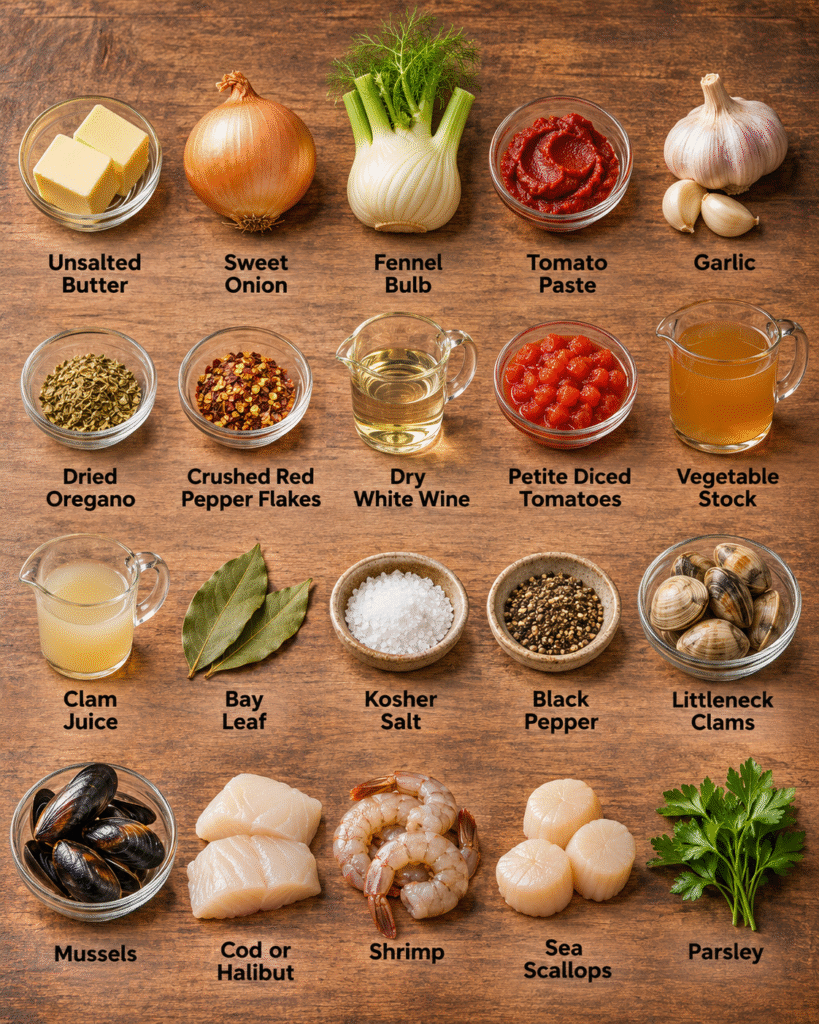
This recipe uses 19 ingredients, including five kinds of seafood and a flavorful tomato-based broth.
Complete Ingredient List
- 4 tablespoons unsalted butter
- 1 medium sweet onion, diced
- 1 small fennel bulb, cored and diced
- 2 tablespoons tomato paste
- 3 cloves garlic, minced
- ½ teaspoon dried oregano
- ¼ teaspoon crushed red pepper flakes
- ¾ cup dry white wine
- 1 (28-ounce) can petite diced tomatoes
- 2 cups vegetable stock
- 2 cups clam juice
- 1 bay leaf
- Kosher salt and freshly ground black pepper, to taste
- 12 littleneck clams, scrubbed
- ½ pound mussels, scrubbed and debearded
- 1 pound cod or halibut fillets, cut into ¾-inch pieces
- ½ pound medium shrimp, peeled and deveined
- 8 large sea scallops
- 2 tablespoons chopped fresh parsley leaves
Helpful Ingredient Notes
Unsalted butter: Butter provides a rich foundation for softening the onion and fennel.
Sweet onion: Sweet onion adds mild flavor to the tomato broth without overpowering the seafood.
Fennel: Fresh fennel has a subtle anise-like flavor that works especially well with tomatoes, wine, and shellfish.
Tomato paste: Tomato paste adds concentrated tomato flavor and depth to the stew.
Fresh garlic: Garlic contributes savory aroma and is added after the vegetables have softened.
Dried oregano: Oregano provides an herbal note that complements the Italian-American character of the dish.
Crushed red pepper flakes: A small amount adds gentle warmth without making the broth excessively spicy.
Dry white wine: Wine brings acidity and complexity to the tomato broth. A dry white wine is preferable to a sweet variety.
Petite diced tomatoes: The tomatoes and their juices provide body, acidity, and color.
Vegetable stock: Vegetable stock gives the broth a savory foundation while allowing the seafood flavor to remain prominent.
Clam juice: Clam juice contributes briny seafood flavor. Because packaged clam juice can contain significant sodium, season the stew carefully.
Bay leaf: The bay leaf adds a subtle herbal flavor during simmering and is removed before serving.
Littleneck clams: Choose live clams with intact shells. Discard any with broken shells or those that remain open after tapping.
Mussels: Fresh mussels add a delicate briny flavor. Scrub them and remove their beards before cooking.
Cod or halibut: Both are mild white fish that work well in seafood stew. Cut the fillets into evenly sized pieces so they cook consistently.
Medium shrimp: Shrimp cook quickly and should be added near the end to preserve their tenderness.
Sea scallops: Large sea scallops add a sweet, delicate seafood flavor. Remove the tough side muscle if it is attached.
Fresh parsley: Parsley gives the finished stew a fresh, colorful garnish.
How to Make Classic San Francisco Cioppino
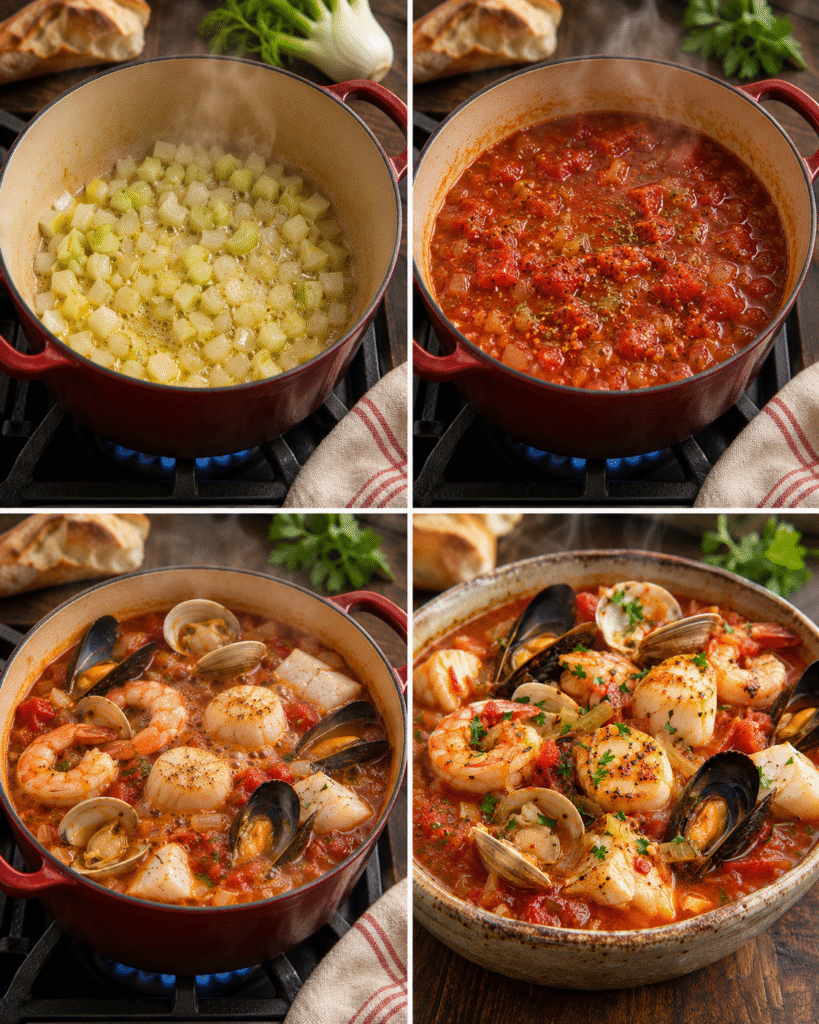
This cioppino follows eight steps. Preparing the shellfish carefully and adding the different types of seafood at the correct times are the keys to a flavorful, well-cooked stew.
Step 1: Prepare the Seafood
Begin by inspecting the clams and mussels.
Discard any shellfish with cracked or broken shells.
If a clam or mussel is open, tap it gently. Discard it if it remains open and does not respond.
Scrub the clams thoroughly and scrub and debeard the mussels.
Check the sea scallops for their tough side muscles and remove them if attached.
Keep the prepared seafood refrigerated while making the broth.
This preparation is especially important because the different seafood ingredients will be added to the stew at separate stages.
Step 2: Soften the Onion and Fennel
Melt the unsalted butter in a large, heavy-bottomed pot over medium heat.
Add the diced sweet onion and fennel.
Cook for 6–8 minutes, stirring occasionally, until the vegetables soften.
The onion should become tender and translucent, while the fennel begins releasing its aromatic flavor.
Avoid browning the vegetables too deeply.
Step 3: Add the Tomato Paste and Aromatics
Stir the tomato paste into the softened vegetables.
Cook for 1–2 minutes, stirring frequently.
This helps incorporate the concentrated tomato flavor into the butter and vegetables.
Add the minced garlic, dried oregano, and crushed red pepper flakes.
Cook for another 30 seconds, just until fragrant.
Be careful not to burn the garlic.
Step 4: Add the White Wine
Pour the dry white wine into the pot.
Use a wooden spoon to scrape up any browned bits from the bottom.
Allow the wine to simmer for 3–4 minutes, until slightly reduced.
This step helps build the flavor of the tomato broth before the remaining liquid is added.
Step 5: Simmer the Tomato Broth
Add the petite diced tomatoes along with their juices.
Pour in the vegetable stock and clam juice.
Add the bay leaf and stir to combine.
Bring the mixture to a gentle simmer.
Partially cover the pot and cook for 20–25 minutes, stirring occasionally.
During this time, the onion and fennel will become tender and the flavors will blend.
Taste the broth before adding salt, since clam juice can already be salty.
The finished broth should be savory, lightly tangy, and aromatic.
Step 6: Cook the Clams and Mussels
Add the cleaned littleneck clams to the gently simmering broth.
Cover the pot and cook for 4–5 minutes.
Add the mussels, cover again, and cook for another 3–5 minutes.
As the shells open, use tongs or a slotted spoon to transfer the cooked shellfish to a clean bowl.
Keep the bowl covered while the remaining seafood cooks.
Give unopened shellfish a few additional minutes, then discard any clams or mussels that remain closed.
Removing the opened shellfish helps prevent unnecessary overcooking.
Step 7: Cook the Scallops, Fish, and Shrimp
Add the sea scallops to the gently simmering broth.
Cook for 2 minutes.
Add the pieces of cod or halibut and the peeled shrimp.
Gently press the seafood into the liquid so it is mostly submerged.
Continue simmering for 3–5 minutes, or until the shrimp and scallops are opaque throughout and the fish flakes easily.
The fish should reach a safe internal temperature of 145°F (63°C).
Avoid vigorous stirring, which can break apart the tender fish pieces.
Step 8: Finish and Serve
Return the opened clams and mussels to the pot, along with any juices collected in their bowl.
Warm briefly.
Remove the bay leaf and taste the broth.
Adjust the kosher salt and freshly ground black pepper as needed.
Sprinkle the chopped fresh parsley over the stew.
Ladle into serving bowls, distributing the clams, mussels, fish, shrimp, and scallops evenly.
Serve immediately while the broth is hot and the seafood is tender.
Tips for the Best San Francisco Cioppino
1. Prepare All the Seafood Before Cooking
Because seafood cooks quickly, have the clams, mussels, fish, shrimp, and scallops cleaned and ready before beginning the final cooking stages.
Keep them refrigerated until needed.
2. Use Fresh, Properly Handled Shellfish
Choose clams and mussels from a reputable seafood supplier.
Discard damaged shells and shellfish that fail the tap test before cooking.
Also discard shellfish that remain closed after cooking.
3. Don’t Rush the Tomato Broth
The 20–25-minute simmer gives the fennel, onion, tomato, wine, and stock time to develop flavor.
Avoid adding the seafood too early.
4. Cook the Seafood in Stages
Clams and mussels need time to open, while shrimp, scallops, and fish cook more quickly.
Following the original order helps the seafood cook more evenly.
5. Avoid Overstirring the Fish
Cod and halibut become delicate as they cook.
Gently move the ingredients only when necessary to keep the fish pieces intact.
6. Taste Before Adding Salt
Clam juice naturally contributes a salty, briny flavor.
Seasoning at the end helps prevent an overly salty broth.
Common Mistakes to Avoid
Using damaged shellfish: Broken or unresponsive clams and mussels should not be cooked.
Adding all the seafood at once: Different seafood types require different cooking times. Follow the original cooking sequence.
Boiling the stew aggressively: Vigorous boiling can make shrimp tough, overcook scallops, and break apart the fish.
Overcooking the mussels and clams: Remove them as their shells open and return them near the end.
Adding too much salt: Taste the broth after the clam juice has been incorporated.
Easy Variations and Substitutions
These are optional variations and are not included in the original recipe.
Use Another Firm White Fish
A different mild, firm white fish could replace the cod or halibut.
However, cooking time may vary depending on the type and thickness of the fish.
Add More Heat
For a spicier stew, a little additional crushed red pepper could be used.
Start cautiously so the heat doesn’t overpower the seafood.
Try a Different Seafood Combination
Cioppino is adaptable, and additional seafood such as cooked crab could be considered.
Any change in the seafood selection may require adjusting the cooking sequence and timing.
Prepare the Tomato Broth Ahead
The tomato-wine broth can be prepared in advance and refrigerated promptly.
When ready to serve, reheat the broth thoroughly and add the fresh seafood according to the recipe.
This approach may make entertaining easier while preserving the seafood’s texture.
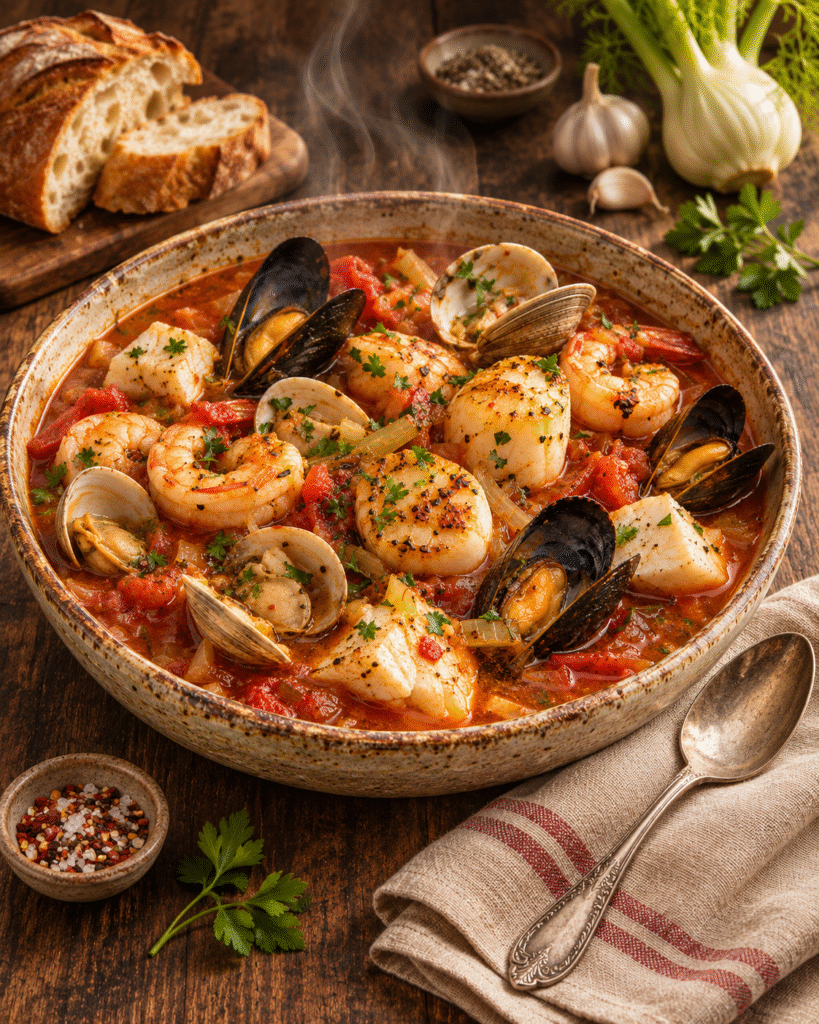
What to Serve With Cioppino Seafood Stew
Cioppino has a flavorful broth that pairs especially well with bread.
Crusty sourdough bread: A classic accompaniment for soaking up the tomato-wine broth.
Toasted garlic bread: Crisp garlic bread complements the seafood and savory tomatoes.
Fresh green salad: A salad with a light vinaigrette balances the richness of the stew.
Roasted asparagus: Simple roasted vegetables make a light side dish.
For another hearty seafood dinner, explore Seafood Gumbo, which features a very different Louisiana-inspired broth built around a dark roux.
How to Store, Freeze, and Reheat Cioppino
How Long Does Cioppino Last in the Refrigerator?
Transfer leftover cioppino to shallow, airtight containers.
Refrigerate promptly at 40°F (4°C) or below.
Properly cooked and refrigerated seafood leftovers generally keep for 3–4 days.
For convenience, remove empty shells from leftover portions before storage.
Keep the seafood submerged in the broth where practical to help protect it from drying out.
Do not leave the stew at room temperature for more than two hours, or more than one hour when temperatures exceed 90°F (32°C).
Can You Freeze Cioppino?
Cioppino can be frozen, but the seafood’s texture may change after thawing.
Shrimp and scallops can become firmer, and pieces of fish may break apart.
For the best quality, consider freezing the tomato broth separately before the seafood is added.
Thaw the broth safely, bring it back to the appropriate cooking temperature, and add fresh seafood when preparing the stew.
How to Reheat Leftover Cioppino
Transfer the refrigerated stew to a saucepan.
Reheat thoroughly to 165°F (74°C). USDA guidance recommends bringing leftover soups and stews to a boil when reheating.
Stir carefully and avoid prolonged boiling once thoroughly heated, since the seafood can become tough.
Serve immediately after reheating.
Frequently Asked Questions
What Is Cioppino Made Of?
Cioppino is a seafood stew typically made with a tomato-based broth, garlic, onion, wine, stock, and an assortment of fish and shellfish.
This version uses clams, mussels, cod or halibut, shrimp, and scallops.
What Is the Difference Between Cioppino and Bouillabaisse?
Cioppino is associated with San Francisco’s Italian-American fishing communities and commonly includes a tomato-and-wine broth.
Bouillabaisse comes from the Mediterranean region of France and traditionally uses a different combination of fish, herbs, and seasonings.
Although both are seafood stews, their culinary traditions and flavor profiles differ.
Can I Make Cioppino Ahead of Time?
The tomato broth can be prepared ahead and refrigerated.
For the best texture, cook the fish and shellfish shortly before serving rather than leaving them in the broth for an extended period.
Can I Use Frozen Seafood?
Yes. Frozen fish, shrimp, and scallops can be used when properly thawed according to safe food-handling guidelines.
For live clams and mussels, follow the supplier’s handling instructions and use shellfish that meet freshness and safety requirements.
How Do I Know When the Seafood Is Done?
Clams and mussels should open during cooking; discard any that remain closed.
Shrimp and scallops should be firm and opaque, while the fish should reach 145°F (63°C) and flake easily with a fork.
Classic San Francisco Cioppino Seafood Stew
A hearty San Francisco-style seafood stew with clams, mussels, white fish, shrimp, and scallops simmered in an aromatic tomato, fennel, white wine, and clam-juice broth.
Ingredients
- 4 tablespoons unsalted butter
- 1 medium sweet onion, diced
- 1 small fennel bulb, cored and diced
- 2 tablespoons tomato paste
- 3 cloves garlic, minced
- ½ teaspoon dried oregano
- ¼ teaspoon crushed red pepper flakes
- ¾ cup dry white wine
- 1 (28-ounce) can petite diced tomatoes
- 2 cups vegetable stock
- 2 cups clam juice
- 1 bay leaf
- Kosher salt and freshly ground black pepper, to taste
- 12 littleneck clams, scrubbed
- ½ pound mussels, scrubbed and debearded
- 1 pound cod or halibut fillets, cut into ¾-inch pieces
- ½ pound medium shrimp, peeled and deveined
- 8 large sea scallops
- 2 tablespoons chopped fresh parsley leaves
Instructions
- Prepare the Seafood: Check the clams and mussels, discarding any with cracked shells or shells that remain open after tapping. Remove the tough side muscles from the scallops, if attached. Keep all seafood refrigerated while preparing the broth.
- Soften the Vegetables: Melt the butter in a large, heavy pot over medium heat. Add the onion and fennel. Cook for 6–8 minutes, stirring occasionally, until softened.
- Add the Aromatics: Stir in the tomato paste and cook for 1–2 minutes. Add the garlic, oregano, and crushed red pepper flakes, then cook for another 30 seconds, until fragrant.
- Add the Wine: Pour in the white wine, scraping up any browned bits from the bottom of the pot. Simmer for 3–4 minutes, until slightly reduced.
- Simmer the Broth: Add the diced tomatoes with their juices, vegetable stock, clam juice, and bay leaf. Bring to a gentle simmer. Partially cover and cook for 20–25 minutes, stirring occasionally. Taste before adding salt, since clam juice can be salty.
- Start the Shellfish: Add the clams, cover, and simmer gently for 4–5 minutes. Add the mussels, cover again, and cook for another 3–5 minutes. Transfer shellfish to a covered bowl as their shells open. Give unopened ones a few more minutes, then discard any that remain closed.
- Cook the Remaining Seafood: Add the scallops to the gently simmering broth and cook for 2 minutes. Add the fish and shrimp, gently pressing them into the broth. Simmer for another 3–5 minutes, until the shrimp and scallops are opaque throughout and the fish flakes easily. Avoid vigorous stirring so the fish stays intact.
- Finish and Serve: Return the opened clams and mussels, along with any collected juices, to the pot. Warm briefly, remove the bay leaf, and adjust the salt and pepper. Sprinkle with parsley and ladle into bowls, distributing the seafood evenly. Serve immediately.
Notes
- Choose fresh, properly handled fish and shellfish.
- Discard clams and mussels with broken shells or those that do not respond to tapping.
- Discard clams and mussels that remain closed after cooking.
- Keep seafood refrigerated until needed.
- Simmer the tomato broth before adding the seafood.
- Add shellfish, scallops, fish, and shrimp in the specified order.
- Cook fish to 145°F (63°C), and ensure shrimp and scallops are firm and opaque.
- Taste before adding salt because clam juice can be salty.
- Avoid vigorously boiling the broth after the seafood is added.
- Refrigerate leftovers promptly and reheat thoroughly.
Final Thoughts
Classic San Francisco Cioppino Seafood Stew brings together tender fish, juicy shrimp, sweet scallops, clams, and mussels in a richly flavored tomato-wine broth.
With fragrant fennel, garlic, oregano, and a little red pepper, this stew offers a satisfying taste of San Francisco’s Italian-American seafood tradition.
Serve it hot with crusty sourdough bread, and enjoy the flavorful broth down to the last spoonful.
Do you prefer cioppino with extra shrimp, more scallops, or plenty of shellfish? Share your favorite seafood combination in the comments, and if you prepare this recipe, consider leaving a rating or sharing a photo.
More Seafood Recipes to Try
- Seafood Gumbo — A Louisiana-inspired seafood stew with shrimp, lump crabmeat, smoky andouille sausage, and a richly browned roux.
- Southern Seafood Gumbo with Crab and Shrimp — A hearty Southern seafood dish featuring shrimp, crab, tomatoes, okra, and Cajun seasoning.
- Creamy Lobster, Shrimp and Crab Bisque — A smooth, cream-based seafood soup with lobster, shrimp, and crab.
More in Lunch Recipes
Chicken, Shrimp & Smoked Sausage Gumbo Over Rice

Classic San Francisco Cioppino Seafood Stew

Butter Crab and Shrimp Bombs
