
Southern Seafood Gumbo with Crab and Shrimp

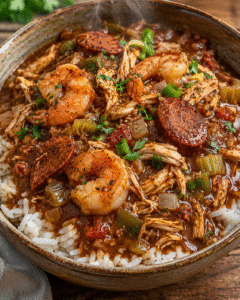
A big bowl of Southern Seafood Gumbo with Crab and Shrimp brings together everything comforting about a hearty Southern-style meal. Tender shrimp, sweet lump crab meat, smoky sausage, and sliced okra simmer in a richly seasoned broth made with a deep chocolate-brown roux.
The flavor begins with a simple combination of flour and oil, slowly cooked until dark and nutty. Onion, bell pepper, celery, garlic, tomatoes, and Cajun seasonings build layers of savory flavor, while the shrimp and crab are added near the end to keep the seafood tender.
Served hot over fluffy white rice, this homemade gumbo is a satisfying choice for Sunday dinner, family gatherings, or a cozy evening when you’re craving something warm and full of Southern flavor.
Prep Time: 20 minutes
Cooking Time: 1 hour 15 minutes
Total Time: 1 hour 35 minutes

Why You’ll Love This Southern Seafood Gumbo
This gumbo combines classic Southern-inspired flavors with straightforward stovetop cooking.
- Loaded with seafood: A full pound each of shrimp and lump crab meat gives this gumbo plenty of seafood flavor and texture.
- Rich, dark roux: Slowly cooking flour and oil until chocolate-brown adds a deep, toasted flavor to the broth.
- Three kinds of savory goodness: Shrimp, crab, and smoked sausage create a satisfying combination in every bowl.
- Vegetables that build flavor: Onion, bell pepper, celery, tomatoes, and okra add freshness, body, and balance.
- Warm Cajun seasoning: Smoked paprika, thyme, cayenne, and Cajun seasoning provide a savory, gently spicy finish.
- Comforting with rice: The flavorful broth pairs beautifully with cooked white rice.
What Makes Southern Seafood Gumbo Special?
Gumbo is one of Louisiana’s most recognizable dishes, with many regional and family variations.
Some recipes feature chicken and sausage, others highlight shrimp and crab, and some combine several proteins in one pot. The use of okra, tomatoes, and different roux colors also varies between cooking traditions.
This Southern-inspired version includes a few elements that give it a distinctive character.
A Deep Chocolate-Brown Roux
The roux forms the foundation of the gumbo.
Vegetable oil and flour are cooked together slowly until the mixture reaches a deep brown color. During this process, the flour develops a rich, toasted flavor.
A darker roux generally provides less thickening power than a pale roux, but it contributes more pronounced roasted flavor.
The Classic Vegetable Trinity
Onion, green bell pepper, and celery are often called the holy trinity of Louisiana cooking.
They soften in the hot roux before the broth is added, creating a flavorful vegetable base.
Okra and Tomatoes
Sliced okra contributes texture and natural thickening, while diced tomatoes bring a gentle acidity that complements the rich broth.
Shrimp and Lump Crab Meat
Shrimp cook directly in the seasoned gumbo during the final minutes.
The crab is added afterward and warmed gently, helping preserve the delicate pieces rather than breaking them apart during a long simmer.
Ingredients You’ll Need

This recipe brings together simple vegetables, seafood, smoked sausage, and pantry seasonings.
Complete Ingredients List
- 1/2 cup vegetable oil
- 1/2 cup all-purpose flour
- 1 large yellow onion, diced
- 1 green bell pepper, diced
- 2 celery stalks, diced
- 4 garlic cloves, minced
- 6 cups seafood stock or chicken broth
- 1 (14.5 oz) can diced tomatoes
- 1 tbsp Worcestershire sauce
- 2 tsp Cajun seasoning
- 1 tsp smoked paprika
- 1 tsp dried thyme
- 1/2 tsp cayenne pepper, or to taste
- 2 bay leaves
- 12 oz smoked sausage, sliced
- 1 lb large shrimp, peeled and deveined
- 1 lb lump crab meat, picked over for shells
- 1 cup sliced okra
- Salt and black pepper, to taste
- 2 tbsp chopped fresh parsley
- 2 green onions, sliced
- Cooked white rice, for serving
Helpful Ingredient Notes
Vegetable oil and all-purpose flour: These two ingredients create the dark roux. Their equal measurements make a smooth starting mixture that gradually darkens with steady cooking.
Yellow onion, bell pepper, and celery: Dice the vegetables into reasonably even pieces so they soften consistently and distribute throughout the finished gumbo.
Seafood stock or chicken broth: Seafood stock contributes additional ocean-inspired flavor, while chicken broth provides a savory alternative. Choose whichever option best suits your preference.
Diced tomatoes: The tomatoes add color, acidity, and a different texture from gumbo recipes that rely only on stock and roux.
Cajun seasoning: Spice blends vary widely in saltiness and heat. Taste the finished gumbo before adding additional salt.
Smoked paprika: This contributes a mild smoky note that works well with the sausage.
Cayenne pepper: The original recipe includes 1/2 teaspoon, or to taste. Its heat complements the savory ingredients without requiring a separate hot sauce.
Smoked sausage: Choose a flavorful smoked sausage. Fully cooked sausage is convenient for this recipe, which adds the sausage directly to the gumbo to simmer.
Large shrimp: Peeled and deveined shrimp are convenient and cook quickly. Keep them refrigerated until needed.
Lump crab meat: Use cooked, ready-to-eat lump crab meat, and check carefully for shell fragments before adding it.
Okra: Fresh or properly prepared frozen sliced okra can be considered. Okra adds body to the broth as it simmers.
White rice: Cooked rice provides a simple base for the richly seasoned gumbo.
How to Make Southern Seafood Gumbo with Crab and Shrimp
Preparing homemade gumbo is a gradual process. The most important stage is the roux, which requires attention before the remaining ingredients can be added.
Step 1: Make the Dark Roux
Pour the vegetable oil into a large, heavy-bottomed pot.
Heat over medium-low heat, then gradually whisk in the all-purpose flour.
Continue cooking the flour and oil mixture for 20–30 minutes, stirring constantly.
The roux will gradually change from pale to golden brown and eventually to a deep chocolate-brown color.
Watch carefully as the roux darkens. Reduce the heat if it begins cooking too quickly, and do not allow it to burn.
A properly cooked dark roux should smell pleasantly toasted rather than scorched.
Step 2: Add the Onion, Bell Pepper, and Celery
Once the roux reaches the desired deep brown color, stir in the diced yellow onion, green bell pepper, and celery.
Cook for 5–6 minutes, stirring regularly.
The vegetables will begin softening while becoming coated in the flavorful roux.
Adding the vegetables also helps transition the gumbo from the roux-building stage to the simmering stage.
Step 3: Stir in the Garlic
Add the minced garlic to the pot.
Stir and cook for about 30 seconds, just until fragrant.
Garlic cooks quickly, so avoid leaving it unattended in the hot mixture.
Step 4: Build the Gumbo Broth
Slowly pour in the seafood stock while stirring continuously.
If using chicken broth instead, add it in the same manner.
The liquid will loosen the thick roux and gradually create a smooth broth.
Continue stirring until the roux is well incorporated.
Add the diced tomatoes and Worcestershire sauce, stirring everything together.

Step 5: Season the Gumbo
Add the Cajun seasoning, smoked paprika, dried thyme, cayenne pepper, and bay leaves.
Stir until the seasonings are evenly distributed throughout the broth.
The smoked paprika and Cajun seasoning contribute savory depth, while cayenne provides a touch of heat.
Step 6: Add the Smoked Sausage
Stir the sliced smoked sausage into the seasoned broth.
Bring the mixture to a gentle simmer.
The smoky flavor of the sausage will gradually blend with the roux, vegetables, tomatoes, and seasonings as the gumbo cooks.
Step 7: Simmer for 30 Minutes
Reduce the heat to low.
Allow the gumbo to simmer uncovered for approximately 30 minutes.
Stir occasionally to prevent the ingredients from sticking to the bottom of the pot.
During this time, the vegetables continue softening and the flavors become more integrated.
Keep the simmer gentle rather than allowing the gumbo to boil vigorously.
Step 8: Add the Okra
Stir the sliced okra into the simmering gumbo.
Continue cooking for another 10 minutes.
The okra softens while releasing natural thickening compounds into the broth.
The finished gumbo should have a rich, spoonable consistency rather than becoming overly thick.
Step 9: Cook the Shrimp
Add the peeled and deveined large shrimp.
Cook for approximately 3–4 minutes, until the shrimp turn pink and opaque.
Shrimp cook quickly, so keep an eye on them during this stage.
Avoid extending the cooking time unnecessarily, as shrimp can become rubbery when overcooked.
Step 10: Gently Fold in the Crab Meat
Add the lump crab meat to the gumbo.
Fold it gently into the hot broth, being careful not to break the larger pieces.
Continue cooking for another 2–3 minutes, just until the cooked crab meat is heated through.
The seafood should remain distinct and tender.
Step 11: Adjust the Seasoning
Remove and discard the bay leaves.
Taste the gumbo and adjust with salt, black pepper, or additional Cajun seasoning if needed.
Because both the broth and smoked sausage can contain salt, tasting first helps prevent overseasoning.
Step 12: Finish and Serve
Stir in the chopped fresh parsley and sliced green onions.
Spoon cooked white rice into individual serving bowls.
Ladle the hot seafood gumbo over the rice, making sure each portion includes shrimp, crab, sausage, vegetables, and plenty of flavorful broth.
Serve immediately while hot.
Tips for the Best Southern Seafood Gumbo
1. Use a Heavy-Bottomed Pot
A sturdy Dutch oven or heavy stockpot helps distribute heat evenly.
This is especially important while cooking the roux, which can scorch when exposed to hot spots.
2. Never Rush the Roux
The roux develops flavor gradually as the flour browns.
Maintain medium-low heat and stir continuously until it reaches the deep chocolate color specified in the recipe.
If the roux burns and develops a sharp, unpleasant smell, start that stage again rather than adding the remaining ingredients.
3. Add the Stock Gradually
Introducing the stock slowly while stirring helps blend the hot roux smoothly into the liquid.
Be cautious of bubbling and steam when liquid first reaches the hot mixture.
4. Keep the Seafood Cold Until Needed
Shrimp and crab are added during the final cooking stages.
Keep them properly refrigerated while the gumbo base simmers.
This helps maintain seafood quality and supports safe food handling.
5. Avoid Overcooking the Shrimp
Shrimp cook much faster than the vegetables and sausage.
Add them only after the gumbo has completed its longer simmering stages, and stop cooking once they are opaque and properly cooked.
6. Handle Lump Crab Gently
Large pieces of lump crab meat are delicate.
Use a light folding motion rather than vigorous stirring to help retain their shape.
Common Mistakes to Avoid
Burning the roux: High heat or insufficient stirring can scorch the flour. Keep the heat controlled and watch the mixture closely as it approaches chocolate-brown.
Adding too much salt early: Cajun seasoning, stock, Worcestershire sauce, and smoked sausage can all contribute salt. Make final adjustments after the gumbo has simmered.
Adding seafood during the long simmer: Shrimp and crab are delicate compared with sausage. Follow the final seafood-cooking steps rather than simmering them for the full 30 minutes.
Forgetting the bay leaves: Remove both bay leaves before serving. Their purpose is to season the broth, not to be eaten.
Easy Variations and Substitutions
The following ideas are optional variations and are not changes to the original recipe.
Use Andouille Sausage
Andouille sausage is a flavorful alternative to another smoked sausage.
Its seasoning and smoky character work well with Cajun-style dishes, although the finished flavor will depend on the sausage you choose.
Make It Less Spicy
For a milder variation, consider reducing the cayenne pepper.
This will make the gumbo less spicy while retaining flavor from smoked paprika, thyme, and Cajun seasoning.
Add Another Seafood Variety
Some seafood gumbo variations include oysters or other cooked seafood.
Different seafood varieties require different handling and cooking times, so any added seafood should be prepared and cooked appropriately.
Prepare a Chicken Broth Version
The recipe already allows chicken broth instead of seafood stock.
Chicken broth produces a savory base, although the finished gumbo may have a less pronounced seafood-stock flavor.
What to Serve With Southern Seafood Gumbo
This flavorful gumbo is hearty enough to serve as a main course, especially when paired with rice.
Steamed white rice: The classic accompaniment listed in the recipe. The rice absorbs the seasoned broth while providing a mild contrast to the spices.
Warm cornbread: A slice of cornbread offers a soft, slightly sweet contrast to the deeply savory gumbo.
Crusty French bread: A piece of bread is useful for soaking up the remaining broth.
Simple green salad: Fresh greens with a light dressing create a refreshing side dish that balances the richness of the gumbo.
For another seafood-centered dinner, explore Seafood Gumbo, a different Cozy Oven Kitchen variation that uses homemade shrimp-shell stock, andouille sausage, amber beer, and a longer simmer.
How to Store, Freeze, and Reheat Seafood Gumbo
Refrigerating Leftovers
Allow the gumbo to cool rapidly by transferring leftovers into shallow, airtight containers.
Refrigerate promptly at 40°F (4°C) or below.
Properly handled cooked seafood and soups or stews generally keep for 3–4 days in the refrigerator.
Do not leave the gumbo at room temperature for more than 2 hours, or more than 1 hour when the surrounding temperature is above 90°F (32°C).
Store leftover rice separately from the gumbo.
Can You Freeze Seafood Gumbo?
Yes, gumbo can be frozen, although cooked shrimp and crab may lose some of their delicate texture after thawing.
For a make-ahead approach, consider preparing and freezing the seasoned gumbo base without the seafood. The shrimp and crab can then be added when the base is reheated and ready to finish.
For fully cooked gumbo, portion it into freezer-safe containers and freeze promptly.
For best quality, aim to use frozen gumbo within about 2–3 months.
How to Reheat Seafood Gumbo
Thaw frozen gumbo safely in the refrigerator when possible.
Transfer it to a saucepan and heat over medium heat, stirring occasionally.
Bring the broth back to a boil and ensure leftovers reach 165°F (74°C) throughout before serving.
Avoid prolonged heating once the gumbo is thoroughly hot, since repeated cooking can affect the seafood’s texture.
Reheat any stored rice separately until steaming hot.
Frequently Asked Questions
What Is the Secret to a Flavorful Southern Seafood Gumbo?
A well-cooked dark roux, flavorful broth, aromatic vegetables, and properly balanced seasonings all contribute to gumbo’s flavor.
This recipe also uses smoked sausage, tomatoes, okra, shrimp, and crab to build additional layers of taste and texture.
Should Gumbo Have Tomatoes?
Some Louisiana and Southern gumbo traditions include tomatoes, while others leave them out.
This particular recipe includes a 14.5-ounce can of diced tomatoes, which adds acidity and a slightly different character to the broth.
Does Okra Make Gumbo Thicker?
Yes. Okra releases natural soluble fibers that can help thicken the surrounding liquid.
In this recipe, the okra is added after the initial simmer and cooked for another 10 minutes.
Can I Use Frozen Shrimp?
Yes. Frozen raw shrimp can be used after being thawed safely according to package instructions.
Drain them well before adding them to the gumbo, and cook them thoroughly.
What Kind of Crab Is Best for Gumbo?
Lump crab meat works especially well because it provides noticeable pieces of sweet, tender crab throughout the gumbo.
Use cooked, ready-to-eat crab meat and check carefully for shells.
Can I Make Southern Seafood Gumbo Ahead of Time?
Yes. One practical approach is to prepare the roux, vegetables, broth, seasonings, and sausage base ahead of time.
Refrigerate the base promptly, then reheat it thoroughly before cooking the shrimp and warming the cooked crab.
This helps avoid repeatedly cooking the delicate seafood.

Southern Seafood Gumbo with Crab and Shrimp

A hearty Southern-inspired seafood gumbo with shrimp, lump crab meat, smoked sausage, okra, tomatoes, Cajun seasonings, and a rich chocolate-brown roux, served hot over white rice.
Ingredients
- 1/2 cup vegetable oil
- 1/2 cup all-purpose flour
- 1 large yellow onion, diced
- 1 green bell pepper, diced
- 2 celery stalks, diced
- 4 garlic cloves, minced
- 6 cups seafood stock or chicken broth
- 1 (14.5 oz) can diced tomatoes
- 1 tbsp Worcestershire sauce
- 2 tsp Cajun seasoning
- 1 tsp smoked paprika
- 1 tsp dried thyme
- 1/2 tsp cayenne pepper, or to taste
- 2 bay leaves
- 12 oz smoked sausage, sliced
- 1 lb large shrimp, peeled and deveined
- 1 lb lump crab meat, picked over for shells
- 1 cup sliced okra
- Salt and black pepper, to taste
- 2 tbsp chopped fresh parsley
- 2 green onions, sliced
- Cooked white rice, for serving
Instructions
- Make the roux: Heat the vegetable oil in a large heavy-bottomed pot over medium-low heat. Gradually whisk in the flour and cook, stirring constantly, until the roux develops a deep chocolate-brown color. This may take 20–30 minutes, so keep stirring to prevent burning.
- Add the vegetables: Stir the onion, bell pepper, and celery into the roux. Cook for 5–6 minutes, until the vegetables begin to soften.
- Add the garlic: Stir in the minced garlic and cook for about 30 seconds, until fragrant.
- Build the broth: Slowly pour in the seafood stock while stirring continuously to keep the mixture smooth. Add the diced tomatoes and Worcestershire sauce.
- Season the gumbo: Stir in the Cajun seasoning, smoked paprika, thyme, cayenne pepper, and bay leaves.
- Add the sausage: Stir in the sliced smoked sausage and bring the gumbo to a gentle simmer.
- Simmer: Reduce the heat to low and cook uncovered for about 30 minutes, stirring occasionally so the flavors can develop.
- Add the okra: Stir in the sliced okra and continue simmering for another 10 minutes.
- Add the shrimp: Add the shrimp and cook for 3–4 minutes, until pink and opaque.
- Add the crab: Gently fold in the lump crab meat and cook for another 2–3 minutes, just until heated through. Stir carefully so the crab pieces remain intact.
- Adjust the seasoning: Remove the bay leaves, then taste the gumbo and add salt, black pepper, or additional Cajun seasoning if needed.
- Finish and serve: Stir in the chopped parsley and green onions. Spoon the gumbo into bowls over cooked white rice and serve hot.
Notes
- Keep the roux over controlled heat and stir continuously to avoid scorching.
- Use fully cooked, ready-to-eat lump crab meat for the short final heating step.
- Use fully cooked smoked sausage, or ensure any sausage that requires cooking is cooked to its safe temperature.
- Shrimp should be fully cooked before serving.
- Taste before adding extra salt because the stock, sausage, and Cajun seasoning may already contain sodium.
- Keep seafood refrigerated until needed.
- Refrigerate leftovers promptly in shallow containers.
- Store leftover rice separately.
More in Lunch Recipes
Chicken, Shrimp & Smoked Sausage Gumbo Over Rice

Classic San Francisco Cioppino Seafood Stew

Butter Crab and Shrimp Bombs
