
Seafood Gumbo

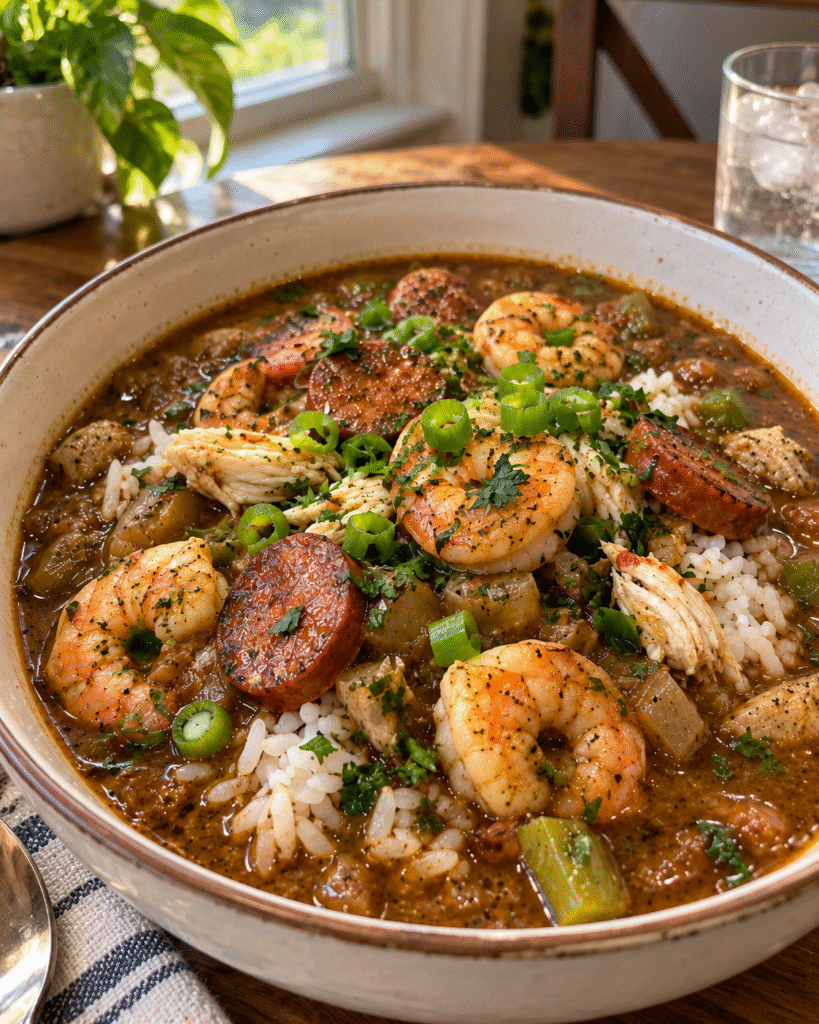
There is something wonderfully comforting about a big pot of homemade Seafood Gumbo simmering on the stove. With tender shrimp, sweet lump crabmeat, smoky andouille sausage, and a rich, deeply seasoned broth, this Louisiana-inspired dish brings plenty of warmth and flavor to the dinner table.
What makes this seafood gumbo special is the combination of homemade shrimp stock and a slow-cooked, deep caramel-colored roux. The shrimp shells add a savory seafood foundation, while the roux creates the signature toasted flavor and body that make gumbo so satisfying. Onion, bell pepper, celery, Cajun seasoning, and a splash of amber beer build even more depth.
Served hot over fluffy white rice, this hearty gumbo is a wonderful choice for weekend cooking, family gatherings, or a comforting dinner when you want something worth spending a little extra time preparing.

Why You’ll Love This Seafood Gumbo Recipe
- Rich homemade seafood flavor: Using shrimp shells to prepare the stock creates a flavorful base without requiring a separate store-bought seafood stock.
- A combination of three proteins: Tender shrimp, lump crabmeat, and smoky andouille sausage bring different textures and savory flavors to every bowl.
- Deep, toasted roux: Slowly cooking the flour with oil and butter gives the gumbo a distinctive color and rich, nutty flavor.
- Classic aromatic vegetables: Yellow onion, green bell pepper, and celery form the flavorful foundation associated with Louisiana-style gumbo.
- Great for a comforting meal: This substantial stew is served with cooked rice, making it a satisfying main dish.
What Makes a Great Seafood Gumbo?
Gumbo is a Louisiana dish known for its deeply flavored broth, aromatic vegetables, and satisfying combination of proteins or seafood.
Many gumbo recipes begin with a roux, a mixture of fat and flour cooked until it develops color and flavor. In this version, the roux cooks for 30–40 minutes until it reaches a deep caramel color.
Unlike a pale roux used to thicken a cream sauce, a dark roux develops a more pronounced toasted flavor. As roux becomes darker, it generally loses some thickening power, so the finished gumbo can have a rich, flowing consistency rather than the texture of a thick gravy.
The traditional vegetable combination of onion, celery, and bell pepper brings sweetness, freshness, and savory depth. Garlic, Cajun seasoning, thyme, and Worcestershire sauce build on those flavors.
Fresh shrimp are added near the end of cooking so they remain tender, while the lump crabmeat is folded in off the heat to help preserve its delicate texture.
The result is a deeply seasoned seafood stew with a rich broth, tender vegetables, smoky sausage, and seafood in every spoonful.
Ingredients You’ll Need for Seafood Gumbo
This recipe uses fresh seafood, familiar vegetables, and pantry seasonings to build a flavorful gumbo from scratch.
Complete Ingredients List
- 2 pounds unpeeled fresh large shrimp
- 1/2 cup butter, divided
- 2 (32-ounce) cartons chicken broth
- 1 pound andouille sausage, sliced
- 1/2 cup vegetable oil
- 1 cup all-purpose flour
- 2 cups finely chopped yellow onion
- 1 cup finely chopped green bell pepper
- 1 cup finely chopped celery
- 2 tablespoons minced garlic
- 1 (12-ounce) bottle amber beer
- 1 tablespoon Cajun seasoning
- 2 teaspoons Worcestershire sauce
- 1 teaspoon dried thyme
- 2 bay leaves
- 1/2 cup green onion tops
- 1/4 cup chopped fresh parsley
- 1 pound lump crabmeat
- Cooked rice for serving

Helpful Ingredient Notes
Fresh large shrimp: Choose unpeeled shrimp because their shells are used to make the stock. After peeling and deveining, keep the shrimp refrigerated until the gumbo is nearly finished cooking.
Lump crabmeat: This adds a sweet, delicate seafood flavor. Because the recipe adds crab after removing the pot from the heat, use fully cooked, ready-to-eat crabmeat. Check it carefully for shells before adding.
Andouille sausage: This smoked sausage brings a bold, savory flavor. Browning the slices before preparing the roux develops additional flavor in the pot.
Butter and vegetable oil: Both fats are used at different stages. Part of the butter flavors the shrimp stock, while the remaining butter and vegetable oil form the base of the roux.
All-purpose flour: This combines with the fat to make the dark roux. The flour needs time and attention to brown properly without burning.
Yellow onion, bell pepper, and celery: These three vegetables are often called the Louisiana “holy trinity.” Their flavors soften and blend into the gumbo as it simmers.
Amber beer: The beer adds malty flavor and additional depth. This recipe contains beer and should not be considered alcohol-free simply because it simmers.
Cajun seasoning: Different brands vary in salt content and heat level. The seasoning provides the gumbo with a savory, warmly spiced character.
Fresh herbs: Green onion tops and parsley add freshness near the end, balancing the rich roux and smoky sausage.
How to Make Seafood Gumbo Step by Step
Homemade seafood gumbo takes patience, especially while preparing the roux. Once the stock and flavor base are ready, the gumbo simmers until the ingredients come together.
Step 1: Prepare the Shrimp
Peel and devein the 2 pounds of fresh large shrimp, placing the shells in a large pot.
Transfer the cleaned shrimp to a covered container and refrigerate them until needed.
Keep the shells because they will provide the flavor for the homemade shrimp stock.
Step 2: Begin the Shrimp Stock
Add 1/4 cup of the butter to the pot containing the reserved shrimp shells.
Heat over medium heat, stirring occasionally, until the butter melts and the shells turn pink.
The shrimp shells begin releasing their seafood flavor into the butter as they cook.
Step 3: Add the Chicken Broth
Pour both cartons of chicken broth into the pot with the shrimp shells.
Bring the mixture to a boil, then reduce the heat and simmer for 15 minutes.
Remove the pot from the heat and keep the stock warm.
The stock will be strained later when it is added to the gumbo.
Step 4: Brown the Andouille Sausage
Place the sliced andouille sausage in a large Dutch oven over medium heat.
Cook until the slices develop a browned exterior.
Remove the sausage with a slotted spoon and set it aside.
Browning the sausage creates savory flavor in the Dutch oven that will carry into the roux and vegetables.
Step 5: Start the Roux
Add the vegetable oil and the remaining 1/4 cup butter to the Dutch oven.
Heat over medium heat until the butter is fully melted.
The fat mixture will provide the base for cooking the flour.
Step 6: Add the Flour
Gradually stir the all-purpose flour into the hot fat using a wooden spoon.
Continue stirring until the flour and fat form a smooth mixture with no dry pockets.
At this point, the roux will have a pale color.
Step 7: Cook the Roux Until Deep Caramel
Reduce the heat to medium-low.
Continue cooking the roux for 30–40 minutes, stirring frequently and paying close attention as it darkens.
The color will gradually change from pale to golden, then brown, and eventually deep caramel.
Avoid letting the roux burn. A properly cooked dark roux has a toasted aroma, while a scorched roux can taste unpleasantly bitter.
If the mixture begins darkening too quickly, lower the heat and continue stirring.
This is one of the most important steps in the recipe, so give it the attention it deserves.
Step 8: Add the Onion, Bell Pepper, and Celery
Once the roux reaches the desired deep caramel color, stir in the finely chopped yellow onion.
Cook for 5 minutes, stirring to coat the onion with the roux.
Add the green bell pepper and celery.
Continue cooking for another 5 minutes, stirring frequently.
The vegetables will begin softening and releasing their aroma into the rich roux.
Step 9: Add the Garlic
Stir in the minced garlic.
Cook for 1 minute, just until fragrant.
Garlic cooks quickly, so keep it moving in the pot to prevent scorching.
Step 10: Pour in the Amber Beer
Add the bottle of amber beer to the Dutch oven.
Stir thoroughly to combine it with the roux and vegetables.
The liquid helps loosen the thick roux and incorporate the flavorful ingredients into the developing gumbo base.
Step 11: Add the Homemade Shrimp Stock
Position a fine-mesh sieve over the Dutch oven and carefully strain the warm shrimp stock into the gumbo.
Discard the strained shrimp shells.
For a smoother mixture, add the stock in about three portions, stirring well after each addition.
This gradual method helps the roux blend evenly with the liquid.
Step 12: Add the Seasonings and Sausage
Stir in the Cajun seasoning, Worcestershire sauce, dried thyme, and bay leaves.
Return the browned andouille sausage to the Dutch oven.
Stir gently so the seasonings distribute throughout the broth.
Step 13: Simmer the Gumbo
Bring the gumbo to a boil.
Reduce the heat to medium-low, cover the Dutch oven, and simmer for 1 1/2 hours.
Stir occasionally during cooking.
This slow simmer allows the vegetables to soften thoroughly while the sausage, seasonings, shrimp stock, and roux develop a cohesive flavor.
Step 14: Add the Shrimp and Fresh Herbs
Stir the chopped green onion tops and fresh parsley into the gumbo.
Add the reserved peeled shrimp.
Continue cooking just until the shrimp turn pink and opaque.
Avoid cooking the shrimp longer than necessary, as extended heating can make them firm and rubbery.
Step 15: Gently Add the Lump Crabmeat
Remove the Dutch oven from the heat.
Gently fold the fully cooked lump crabmeat into the hot gumbo.
Use a light touch so the crab remains in recognizable pieces rather than breaking apart.
Allow the crab to warm through in the hot broth before serving.
Step 16: Serve Over Rice
Remove and discard both bay leaves.
Spoon cooked white rice into serving bowls and ladle the hot seafood gumbo over the rice.
Serve immediately while the broth is hot and the shrimp and crab are tender.

Tips for Making Rich, Flavorful Seafood Gumbo
1. Take Your Time With the Roux
The roux is the foundation of this gumbo’s flavor.
Cooking it for 30–40 minutes gives the flour time to develop its deep caramel color.
Stir steadily, especially during the later stages when the roux can darken quickly.
2. Use a Heavy-Bottomed Dutch Oven
A heavy pot helps distribute heat more evenly during the long roux-cooking process.
A thin-bottomed pot may develop hot spots, making it easier for the flour to scorch.
3. Save Every Shrimp Shell
Because the recipe starts with unpeeled shrimp, the shells are an important part of the flavor-building process.
Simmering them in chicken broth adds a savory seafood character to the finished gumbo.
4. Add the Stock Gradually
Pouring the stock into the roux in portions while stirring helps reduce lumps.
Take care when introducing liquid to the hot roux, since the mixture may bubble and release steam.
5. Add the Seafood Near the End
The sausage benefits from the long simmer, but shrimp and crab are much more delicate.
Adding shrimp near the end and folding in cooked crab off the heat helps preserve their texture.
Common Seafood Gumbo Mistakes to Avoid
Burning the roux: Excessively high heat or insufficient stirring can scorch the flour. Keep the heat controlled and stir frequently. If the roux burns, it is better to begin that stage again than to carry a bitter flavor into the gumbo.
Skipping the shrimp-shell stock: The shells are one of the elements that distinguish this recipe. Using them provides additional seafood flavor.
Adding shrimp too early: Shrimp do not need to simmer for the full 1 1/2 hours. Add them near the end as directed.
Using raw crabmeat at the finishing stage: Because the crab is added off the heat, it must already be fully cooked and ready to eat.
Overstirring after adding crab: Vigorous stirring breaks lump crabmeat into small pieces. Fold it in carefully to maintain its texture.
Easy Seafood Gumbo Variations
The original recipe already offers a rich combination of shrimp, crab, and sausage. If you want to explore another version, consider these optional changes.
Add Okra
Sliced okra is a familiar ingredient in many gumbo variations.
It contributes a vegetable flavor and additional body to the broth. Adding it would change the consistency and ingredient profile of the original recipe.
Try a Different Smoked Sausage
A fully cooked smoked chicken or turkey sausage could be used in place of andouille.
The flavor may be milder, particularly if the alternative sausage contains less pepper or smoke seasoning.
Make It Spicier
For a hotter gumbo, consider serving a little hot sauce on the side.
This allows each person to adjust the heat without changing the seasoning of the entire pot.
Make It Without Beer
If you prefer not to cook with beer, a stock-based variation is possible.
Replacing the amber beer with additional broth will change the flavor, so it should be treated as a variation rather than an identical substitute.
Use a Different Rice
Cooked long-grain white rice is a natural pairing, but other cooked rice varieties can be used according to preference.
These variations are optional ideas and are not part of the original recipe.
What to Serve With Seafood Gumbo
Because seafood gumbo is hearty and generously seasoned, simple accompaniments work particularly well.
Steamed white rice: The traditional pairing for this recipe. Rice absorbs the flavorful broth and makes each serving more substantial.
Warm French bread: Crusty bread is excellent for soaking up the remaining broth.
Cornbread: A slice of lightly sweet or savory cornbread provides a contrast to the boldly seasoned gumbo.
Simple green salad: Fresh lettuce and crisp vegetables with a light vinaigrette balance the richness of the meal.
For a different Cajun-inspired dinner, try Cajun Garlic Butter Shrimp & Sausage Rice, another flavorful way to combine seafood, smoked sausage, and rice.
How to Store, Freeze, and Reheat Seafood Gumbo
How Long Does Seafood Gumbo Last in the Refrigerator?
Transfer leftover gumbo into shallow, airtight containers and refrigerate promptly.
Properly handled cooked seafood dishes can generally be refrigerated for 3–4 days at 40°F (4°C) or below.
Avoid leaving a large pot of gumbo sitting at room temperature for an extended period. Dividing it into smaller containers helps it cool more quickly.
Store any leftover rice separately from the gumbo.
Can You Freeze Seafood Gumbo?
Yes, seafood gumbo can be frozen, although the texture of cooked shrimp and crab may change after thawing and reheating.
For a make-ahead version with better seafood texture, consider preparing and freezing the gumbo base before adding the shrimp and crab. Add the seafood when finishing the reheated base.
If freezing fully prepared gumbo, use freezer-safe airtight containers and leave room for expansion.
Thaw frozen gumbo safely in the refrigerator before reheating.
How Do You Reheat Seafood Gumbo?
Place refrigerated gumbo in a saucepan over medium-low heat.
Stir occasionally while heating it thoroughly. Leftovers should reach 165°F (74°C) before serving.
Avoid prolonged cooking after the gumbo is hot, as repeated heating can toughen the seafood.
Reheat cooked rice separately until steaming hot.
Frequently Asked Questions
What Is the Secret to Good Seafood Gumbo?
The most important elements are a flavorful stock, a properly cooked roux, and careful timing when adding the seafood.
For this recipe, the shrimp-shell stock and slow-cooked deep caramel roux create much of the flavor, while the shrimp and crab are added at the end to preserve their texture.
How Dark Should the Roux Be for Seafood Gumbo?
This recipe calls for a deep caramel-colored roux.
The color should be rich and brown, but the mixture should never smell burnt.
The roux typically develops its color over 30–40 minutes at medium-low heat in this recipe.
Can I Use Frozen Shrimp Instead of Fresh Shrimp?
Frozen raw shrimp can be considered, but for the closest match to the original recipe, choose shell-on shrimp.
Thaw them safely in the refrigerator, then peel and devein them, reserving the shells for the stock.
Using already peeled shrimp would remove the shrimp shells used to prepare the original stock.
Can Seafood Gumbo Be Made Ahead of Time?
Yes. A convenient approach is to prepare the roux, vegetable, stock, seasoning, and sausage base ahead of time.
Refrigerate it safely, then reheat thoroughly before finishing with the seafood.
This helps avoid repeatedly heating shrimp and crab, which can affect their texture.
Is Seafood Gumbo Supposed to Be Thick or Thin?
Gumbo can vary in consistency depending on the recipe.
This version uses a dark roux that creates body and toasted flavor, but it is not intended to become as thick as gravy.
The finished gumbo should have a rich broth that can be ladled easily over rice.
What Is the Difference Between Gumbo and Jambalaya?
Gumbo is generally a stew served with rice, while jambalaya is a rice dish in which the rice cooks with the other ingredients.
In this seafood gumbo recipe, the rice is cooked separately and added at serving time.

Seafood Gumbo

A rich, Louisiana-inspired seafood gumbo featuring tender shrimp, sweet lump crabmeat, smoky andouille sausage, homemade shrimp stock, and a deep caramel roux, served hot over rice.
Ingredients
- 2 pounds unpeeled fresh large shrimp
- 1/2 cup butter, divided
- 2 (32-ounce) cartons chicken broth
- 1 pound andouille sausage, sliced
- 1/2 cup vegetable oil
- 1 cup all-purpose flour
- 2 cups finely chopped yellow onion
- 1 cup finely chopped green bell pepper
- 1 cup finely chopped celery
- 2 tablespoons minced garlic
- 1 (12-ounce) bottle amber beer
- 1 tablespoon Cajun seasoning
- 2 teaspoons Worcestershire sauce
- 1 teaspoon dried thyme
- 2 bay leaves
- 1/2 cup green onion tops
- 1/4 cup chopped fresh parsley
- 1 pound lump crabmeat
- Cooked rice for serving
Instructions
- Prepare the shrimp: Peel and devein the shrimp, reserving the shells in a large pot. Refrigerate the cleaned shrimp until needed.
- Make the shrimp stock: Melt 1/4 cup of the butter in the pot with the shrimp shells over medium heat. Cook until the shells turn pink.
- Add the broth: Pour in the chicken broth and bring to a boil. Reduce the heat and simmer for 15 minutes. Remove from the heat and keep warm.
- Brown the sausage: In a large Dutch oven, cook the sliced andouille sausage until browned. Remove with a slotted spoon and set aside.
- Start the roux: Add the vegetable oil and remaining 1/4 cup butter to the Dutch oven. Heat over medium heat until the butter is completely melted.
- Add the flour: Stir in the all-purpose flour with a wooden spoon until smooth.
- Darken the roux: Reduce the heat to medium-low and cook for 30–40 minutes, stirring frequently, until the roux reaches a deep caramel color.
- Add the vegetables: Stir in the yellow onion and cook for 5 minutes. Add the green bell pepper and celery and cook for another 5 minutes, stirring often.
- Add the garlic: Stir in the minced garlic and cook for 1 minute, until fragrant.
- Add the beer: Pour in the amber beer and stir well to combine with the roux and vegetables.
- Add the shrimp stock: Strain the warm shrimp stock through a fine-mesh sieve directly into the Dutch oven. For a smoother mixture, add it in about three portions, stirring well after each addition.
- Season the gumbo: Add the Cajun seasoning, Worcestershire sauce, dried thyme, bay leaves, and reserved andouille sausage.
- Simmer: Bring the gumbo to a boil, then reduce the heat to medium-low. Cover and simmer for 1 1/2 hours, stirring occasionally.
- Add the shrimp and herbs: Stir in the green onion tops, chopped parsley, and reserved shrimp. Cook just until the shrimp turn pink and opaque.
- Add the crab: Remove the gumbo from the heat and gently stir in the lump crabmeat.
- Serve: Remove the bay leaves and ladle the hot gumbo into bowls with cooked white rice.
Notes
- Use fully cooked, ready-to-eat lump crabmeat because it is added off the heat.
- Keep raw shrimp refrigerated until the final cooking stage.
- Stir the roux frequently and watch carefully for signs of scorching.
- Strain the shrimp-shell stock thoroughly before adding it to the gumbo.
- Avoid overcooking the shrimp after they become pink and opaque.
- Store leftover gumbo and rice separately in the refrigerator.
- Reheat leftovers thoroughly to 165°F (74°C).
More in Dinner Recipes

Shrimp and Crab Seafood Quiche
Creamy Crab and Shrimp Puff Pastry Bites Recipe

1 thought on “Seafood Gumbo”